Kelimutu Guide: The Three Coloured Crater Lakes of Flores
Kelimutu is a volcano in central Flores crowned by three crater lakes of different colours that shift over the years. This guide covers the sunrise trip from Moni, the legend behind the lakes and the practical details you need.
Quick facts
| Location | Kelimutu National Park, Ende Regency, central Flores; summit about 1,640 m |
|---|---|
| Nearest base | Moni village, about 30–40 minutes by car from the car park |
| How to get there | Ende ~1.5 h or Maumere ~3 h by road; 3–4 days overland from Labuan Bajo |
| Entrance fee | About IDR 150,000 per foreign visitor, higher on Sundays and holidays (may change) |
| Best time | April to October; arrive for sunrise |
| Time needed | 2–3 hours at the lakes |
Why visit Kelimutu?
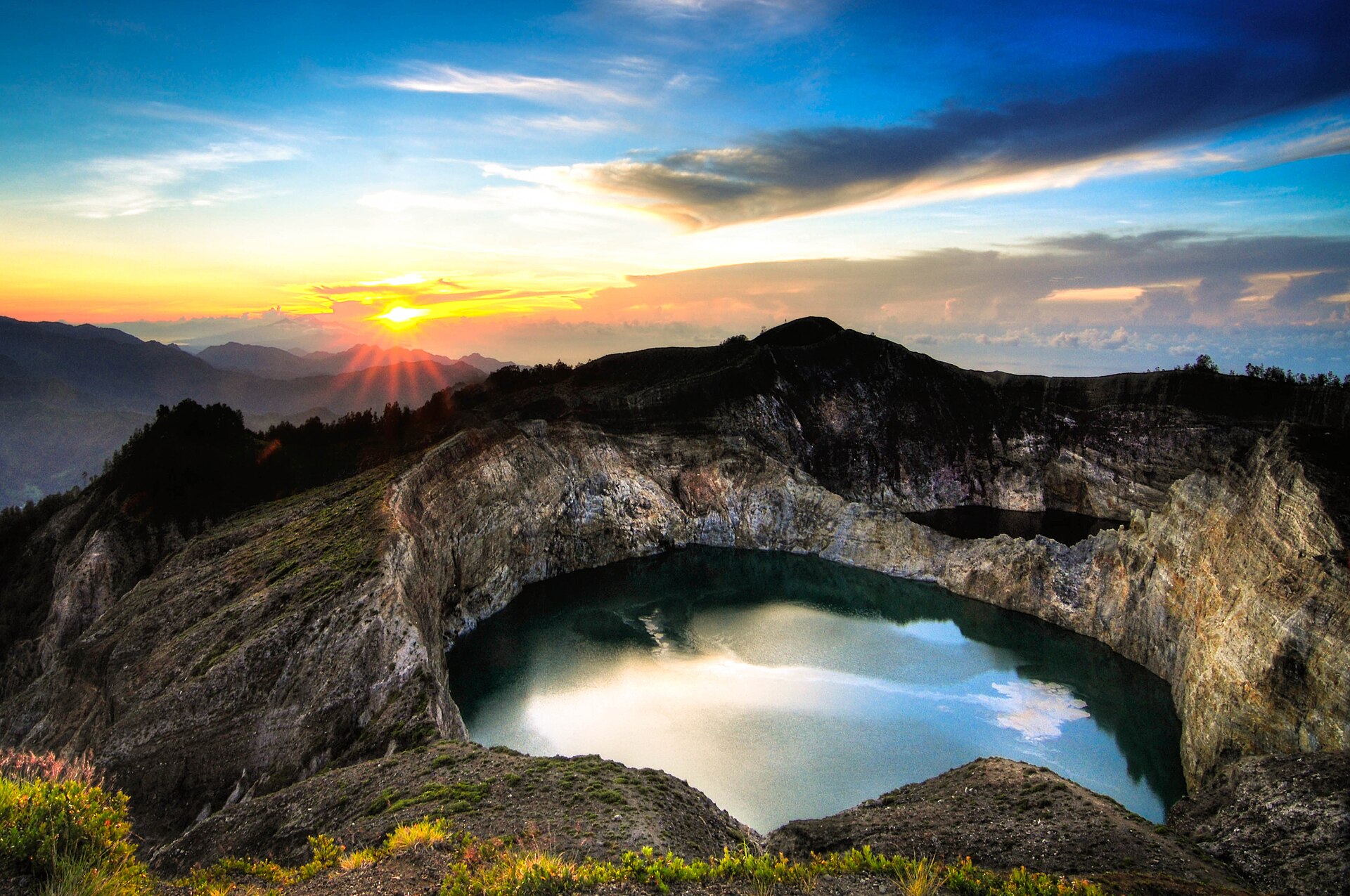
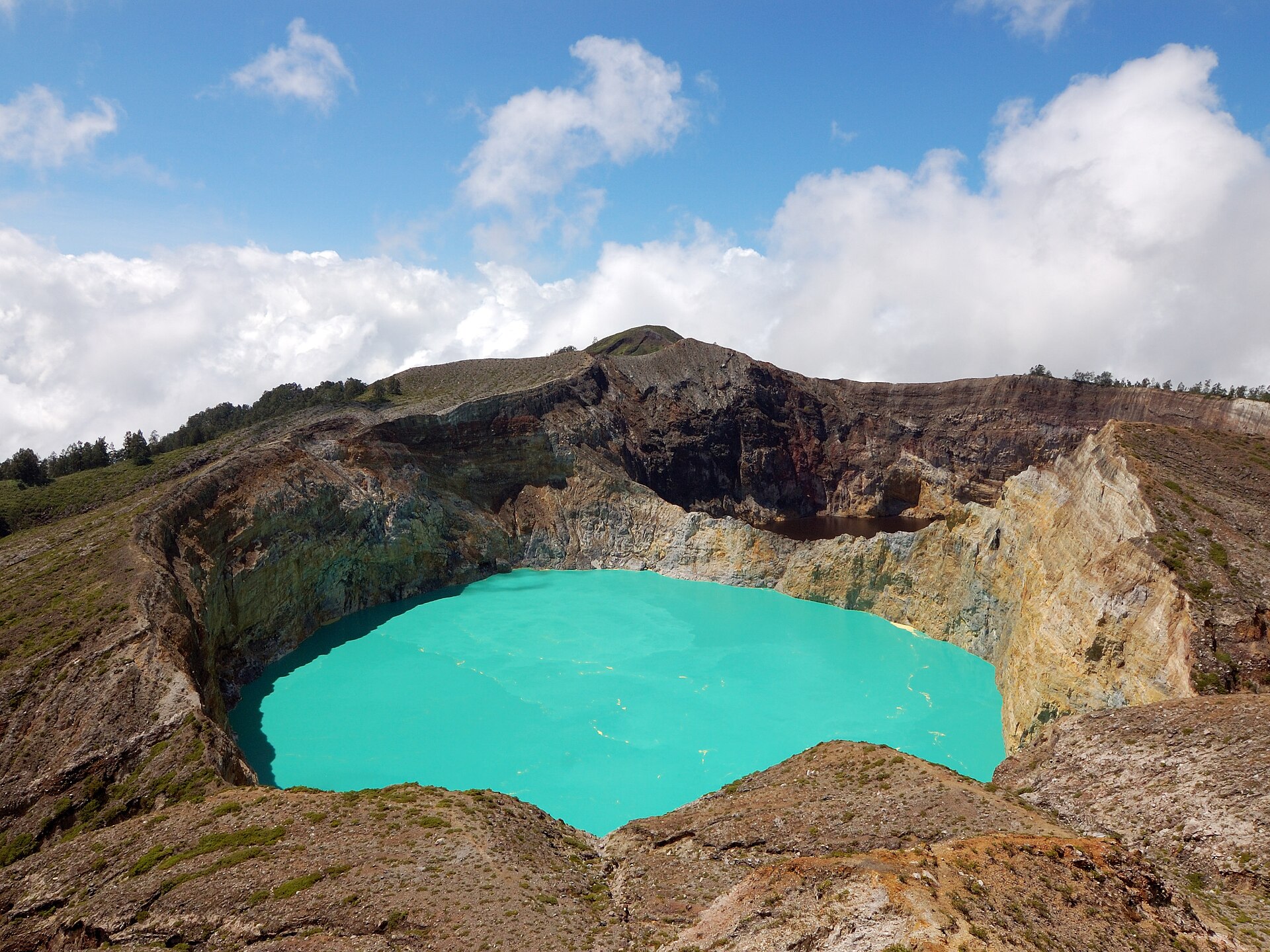
Few places in Indonesia are as strange and beautiful as Kelimutu. At the top of this volcano in central Flores, three crater lakes sit side by side, each a different colour: one may be turquoise, another deep green, the third dark brown or almost black. Over months and years the colours change, so no two visitors see exactly the same scene. Arriving at dawn, as the mist lifts off the craters and the sun lights the water, is one of the great moments of any trip across Flores.
The lakes are protected within Kelimutu National Park, which also covers pine and casuarina forest, endemic birds and Lio farming villages on the lower slopes. Kelimutu is usually visited on a private overland tour of Flores from Labuan Bajo, as one of the final highlights before Ende or Maumere.
The three lakes and the legend of the souls
For the Lio people who live around the mountain, Kelimutu is where the souls of the dead come to rest, and each lake receives different souls. Tiwu Ata Polo is said to hold the souls of those who did evil in life. Tiwu Nuwa Muri Koo Fai is the lake of young men and maidens. The westernmost lake, Tiwu Ata Bupu (also written Ata Mbupu), receives the souls of the elders. The first two lie next to each other, separated only by a narrow crater wall, while Ata Bupu sits a little apart.
Local people still hold ceremonies here, including the annual Pati Ka offering to the ancestors, usually in August. Please treat the lakes as a sacred place: stay on the paths, keep noise down and never throw anything into the craters.
Why do the Kelimutu lakes change colour?
The colours come from volcanic activity beneath each lake. Gases and hot fluids rising through vents on the lake floor carry dissolved minerals such as iron and sulphur. Depending on how much gas enters the water, how acidic it is and how strongly the iron is oxidised, the water turns blue, green, red-brown or nearly black. Because each lake has its own plumbing, they change independently. Changes can happen within weeks, so it is worth looking at recent photos before you go rather than relying on old postcards.
Sunrise at Kelimutu: the walk to the viewpoint
Most visitors stay in Moni, a small village at the foot of the mountain, and leave at around 4 am to reach the car park before sunrise. From the car park a paved path and stairs lead about 1 km through forest to the main viewpoint, a walk of 20–30 minutes at an easy pace. The last section is a flight of steps up to the summit monument, from where you can see all three lakes at once.
By 8 or 9 am clouds often roll in and hide the lakes, so an early start really pays off. After the summit you can walk back slowly and stop at the lower viewpoints over Tiwu Ata Bupu. Local women often sell hot coffee and snacks near the top.
After the earthquake in August 2026, barriers were put up at some viewpoints near the crater rim and a few sections may be closed. The main viewpoint has remained the focus of visits, but please check current access with the park or your guide before you go and follow all signs on site.
Moni and the area around Kelimutu
Moni is a small, relaxed village set among rice terraces and hills at around 600 metres, and it is the obvious base for Kelimutu. Accommodation ranges from simple family guesthouses to a few comfortable lodges, and most can arrange an early car or motorbike to the summit. Evenings are cool and quiet, with a handful of warungs serving Indonesian food and local coffee.
It is worth staying a full day rather than leaving straight after sunrise. A short walk from Moni brings you to the Murundao waterfall, and there are hot springs near the village where locals bathe in the afternoon. Traditional Lio villages nearby, such as Wologai on the road towards Ende, have high-roofed clan houses arranged around stone ancestral altars, and weavers in the area produce fine ikat with natural dyes. On the way down from the lakes, many visitors choose to walk part of the route back through farms and small hamlets instead of driving, which gives a glimpse of everyday life on the volcano’s slopes. Ask your guide to arrange the pick-up point.
How to get to Kelimutu
Moni is about 1.5 hours by road from Ende, which has the nearest airport, and about 3 hours from Maumere, which has more flights. From Moni it takes 30–40 minutes by car to the park gate and car park. Overland from Labuan Bajo the journey normally takes 3 to 4 days with stops in Ruteng, Bajawa and the Riung or Ende area, which makes Kelimutu a natural end point for a Flores road trip.
The foreign visitor entrance fee is about IDR 150,000 per person on weekdays and higher on Sundays and public holidays. Fees are paid in cash at the gate and may change.
Best time to visit Kelimutu and what to bring
The dry season from April to October gives the best chance of clear views, with July to September usually the most reliable months. In the rainy season, from November to March, the lakes are often hidden by cloud, although mornings can still be beautiful. Whatever the month, go for sunrise.
- A warm jacket: the summit can be 10–15°C before dawn.
- Headtorch for the dark walk from the car park.
- Comfortable walking shoes.
- Cash for the entrance fee and coffee at the top.
- Camera with a spare battery; cold drains batteries quickly.
Tours that visit Kelimutu Guide
Flores Overland 5D4N
Cross Flores from west to east on a classic road trip: the spider-web rice fields of Manggarai, the Hobbit cave of Liang Bua, the megalithic village of Bena below Mount Inerie, the blue stones of Penggajawa beach and, as the grand finale, sunrise over the three coloured crater lakes of Kelimutu.
From USD 335 / IDR 5,500,000 · per person
Komodo & Flores 8D7N
The complete Flores experience: three days sailing through Komodo National Park on a phinisi boat, then five days by road across the island to the coloured lakes of Kelimutu.
From USD 535 / IDR 8,800,000 · per person
Frequently asked questions
What is the best time to visit Kelimutu?
The dry season from April to October, ideally July to September. Arrive at sunrise, as clouds often cover the lakes by mid-morning.
How much is the Kelimutu entrance fee?
About IDR 150,000 per foreign visitor on weekdays, more on Sundays and public holidays. Fees are paid in cash at the gate and may change.
How do I get to Kelimutu from Labuan Bajo?
There is no quick route by road: an overland trip across Flores takes 3–4 days via Ruteng and Bajawa. Alternatively, fly to Ende and drive 1.5 hours to Moni.
Why do the Kelimutu lakes change colour?
Volcanic gases and minerals such as iron and sulphur enter each lake from below. Changes in acidity and oxidation turn the water blue, green, red-brown or black, and each lake changes on its own.
Is it hard to walk to the Kelimutu viewpoint?
No. It is about 1 km on a paved path and stairs from the car park, taking 20–30 minutes. Some viewpoints near the crater rim have had barriers since August 2026, so check current access.
More destinations
Plan your Komodo trip
- Komodo Dragons & Komodo Island: The Complete Guide (2026)
- How Much Does a Komodo Trip Cost? Full Budget Breakdown 2026
- Komodo Open Trip vs Private Charter vs Speedboat: Which Should You Choose?
- Komodo Itinerary: 1 Day, 2D1N or 3D2N? Sample Plans for 2026
- Komodo Phinisi Boats & Cabin Types Explained: How to Choose Your Boat
Want to see it for yourself?
Tell us your dates and the places you would like to visit – we put together the best trip for you.