Kalong Island: Watching Thousands of Flying Foxes at Sunset
Every evening at Kalong Island, thousands of flying foxes leave their mangrove roost and stream across the sunset sky towards Flores. It is one of the most memorable wildlife moments of a Komodo trip, watched quietly from the deck of your boat.
Quick facts
| Location | Mangrove island near Rinca, Komodo National Park |
|---|---|
| Distance from Labuan Bajo | Roughly 1.5–2 hours by wooden boat |
| What you see | Flying foxes (large fruit bats) leaving the mangroves at dusk |
| Best time | From about 30 minutes before sunset until dark; all year |
| How you watch | From the boat; there is no landing on the island |
| Good for | Sunset trips, sailing and overnight boat trips, photographers |
What makes Kalong Island special?
Kalong Island takes its name from the Indonesian word for the flying fox, and it lives up to it. By day the small mangrove island looks unremarkable: a low tangle of green on the water between Labuan Bajo and Rinca. But thousands of flying foxes are roosting in those trees, hanging upside down and waiting for evening.
As the sun sinks, they begin to stir. First a few, then dozens, then a steady river of dark, broad-winged silhouettes lift off the mangroves and head east towards the Flores mainland to feed on fruit and flowers through the night. Watching that procession from a boat deck, with the sky turning orange and pink behind it, is one of the quiet highlights of any trip in the area.
About the flying foxes
Flying foxes are large fruit bats, not the small insect-eating bats most people picture. Their wingspan can approach a metre and they have fox-like faces, hence the name. They do not use echolocation to hunt; they navigate largely by sight and smell and feed on nectar, pollen and fruit.
That diet makes them important for the wider ecosystem. As they travel and feed, they pollinate flowers and spread seeds across Flores and the surrounding islands, helping forests regenerate. The colony on Kalong is a reminder that Komodo National Park protects far more than its famous dragons.

When and how to watch the bats
The fly-out happens every evening of the year, starting around sunset and continuing until it is too dark to see. Boats usually arrive about half an hour before sunset and anchor or drift a respectful distance from the mangroves. The first bats appear while the sky is still bright; the peak, when the stream is densest, tends to come just after the sun has dropped.
You watch from the boat – there is no landing on the island, and the mangroves are not a place to walk. Find a spot on the upper deck or the bow, settle in with a drink and let your eyes adjust as the light fades.
- Arrive early: the colours before and during the fly-out are part of the show.
- Binoculars help you see individual bats and their wing shape.
- Bring a light layer – it can get breezy on deck after dark.
- Use insect repellent; mosquitoes come out near the mangroves at dusk.
Photography tips
Photographing bats against a sunset is harder than it looks. The light drops quickly, the animals are moving and the boat is rarely completely still. A few habits help: shoot early, when there is still colour in the sky; use a fast shutter speed and raise the ISO rather than trying long exposures; and frame wide so the stream of bats forms a pattern against the sky rather than chasing single animals.
Phone cameras do best in the first part of the fly-out. Once the sky is dark, put the camera away and simply watch – and never use a flash or bright torch aimed at the bats.
Etiquette at Kalong Island
Kalong is a wildlife site inside a national park, and the bats are easily disturbed. Good crews keep their engines low or off, stay well back from the mangroves and avoid loud music. As a guest, keep voices down during the fly-out, do not shine lights at the trees and never ask to go closer. Drones should not be flown near the colony; the noise and movement stress the animals.
Mangroves themselves deserve respect too. They protect the coast from erosion, shelter young fish and filter the water that flows onto nearby reefs. Even if it is tempting to take a kayak or dinghy in for a closer look, the roost is best left undisturbed.
Best season and what to expect
The flying foxes roost on Kalong all year round, so there is no wrong season to visit. The difference lies in the sky. In the dry season, from about April to November, sunsets are usually clear and colourful, and the bats stand out sharply against the orange glow. In the wet season, from December to March, clouds can hide the sun, but stormy skies often produce dramatic light of their own, and the bats still fly.
Numbers vary from night to night and through the year, depending on food supplies on Flores and the breeding cycle, so do not expect exactly the same spectacle every evening. On a good night the stream seems endless; on a quieter one it is more of a steady trickle. Either way, it is a peaceful, unhurried experience – a chance to sit still on deck after a busy day of swimming and hiking.
Water conditions around Kalong are usually calm, as the island lies in a sheltered stretch of sea, which makes it comfortable for people prone to seasickness and a popular anchorage for boats spending the night.
How Kalong Island fits into a trip
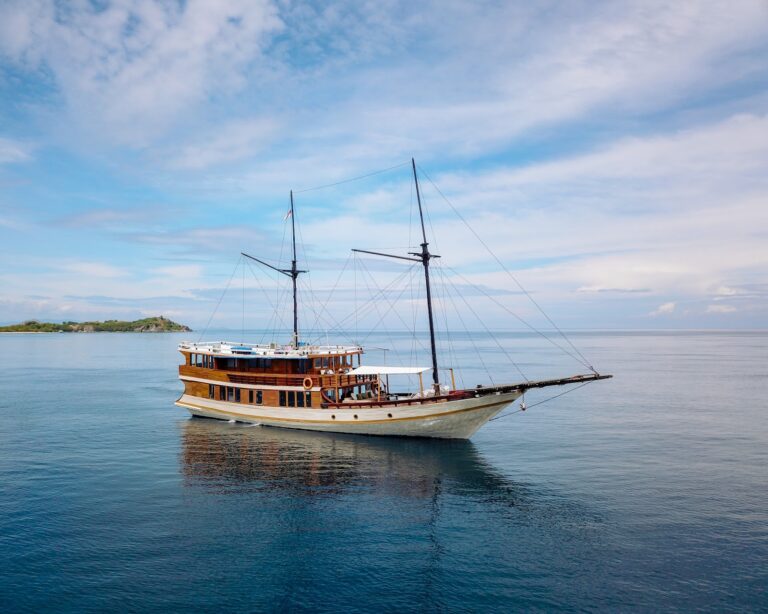
Because the show happens at dusk, Kalong is usually the final stop of a sunset sailing trip or the first evening of a multi-day boat trip from Labuan Bajo. A typical day might begin with the hike on Kelor Island, continue with snorkelling at Manjarite or Siaba Besar, and end anchored off Kalong as the bats fly out. On overnight trips, many boats stay near Kalong for the night, so you wake up already close to Rinca or Padar.
On day trips, remember that the return to Labuan Bajo is in the dark, roughly 1.5 to 2 hours on a wooden boat. Park fees are paid per person and are confirmed by your operator when booking.
Tours that visit Kalong Island
Half-Day Sunset Trip
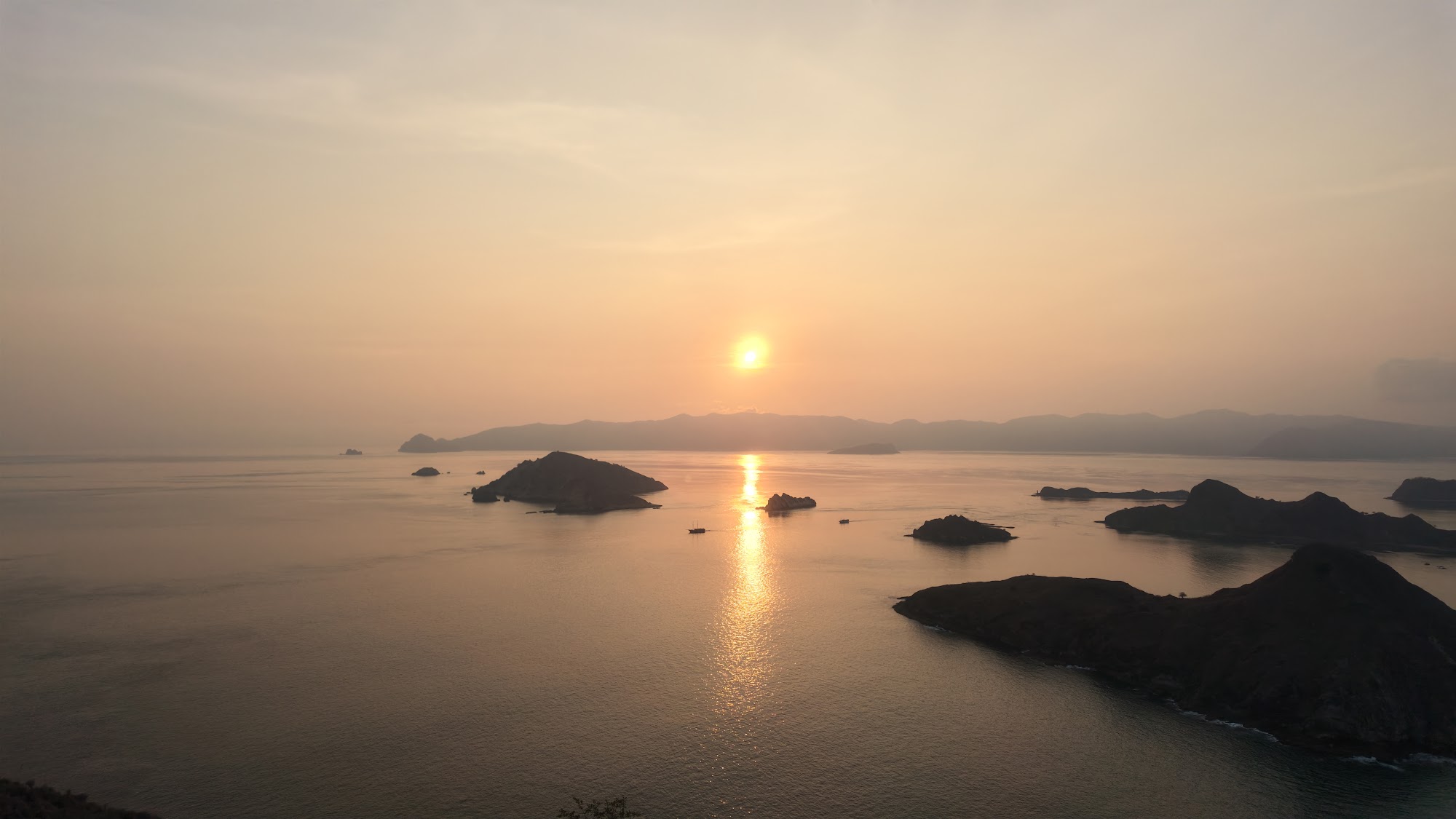
A relaxed afternoon on an open-deck wooden boat: hike up Kelor Island for the view, swim and snorkel at Manjarite, then watch the sunset at Kalong Island as thousands of flying foxes leave the mangroves.
From USD 40 / IDR 650,000 · per person

2D1N Komodo Sailing Trip
Spend a night on a traditional phinisi boat inside Komodo National Park.
From USD 180 / IDR 2,950,000 · per person, sharing cabin
3D2N Phinisi Open Trip
Our most popular trip and the best way to experience Komodo at a relaxed pace.
From USD 170 / IDR 2,800,000 · per person, sharing room
Frequently asked questions
What time do the bats fly at Kalong Island?
The flying foxes start leaving the mangroves around sunset and keep coming until it is dark, usually 30 to 45 minutes in total. Aim to be there about half an hour before sunset.
Can you land on Kalong Island?
No. Kalong is a mangrove island and the bats are watched from the boat at a respectful distance. There is no beach or trail for visitors.
Are the flying foxes at Kalong dangerous?
No. They are fruit bats that feed on nectar and fruit and they fly high overhead on their way to Flores. Simply keep your distance from the roost and do not disturb them.
Is Kalong Island worth visiting?
Yes, especially on a sunset or overnight sailing trip. The sight of thousands of bats crossing a colourful sky is unusual and peaceful, and it rounds off a day of snorkelling and island hopping beautifully.
More destinations
Plan your Komodo trip
- Komodo Dragons & Komodo Island: The Complete Guide (2026)
- How Much Does a Komodo Trip Cost? Full Budget Breakdown 2026
- Komodo Open Trip vs Private Charter vs Speedboat: Which Should You Choose?
- Komodo Itinerary: 1 Day, 2D1N or 3D2N? Sample Plans for 2026
- Komodo Phinisi Boats & Cabin Types Explained: How to Choose Your Boat
Want to see it for yourself?
Tell us your dates and the places you would like to visit – we put together the best trip for you.