Cancar Spider Web Rice Fields: Lingko Viewpoint Guide near Ruteng
The spider web rice fields of Cancar are one of the most photographed sights in Flores: round fields divided like slices of a pie by the traditional Manggarai lingko system. This guide explains what you are looking at, when to go and how to fit it into a trip from Labuan Bajo.
Quick facts
| Location | Cancar, about 17 km west of Ruteng, Manggarai Regency |
|---|---|
| How to get there | About 3–3.5 h by road from Labuan Bajo on the Trans-Flores Highway |
| Viewpoint | Weol hill in Cara village, a 10–15 minute walk up from the road |
| Fee | Small entrance fee or donation, roughly IDR 20,000–25,000 (may change) |
| Best time | Morning; green in the rainy season, golden just before harvest |
| Time needed | 30–60 minutes |
What are the spider web rice fields?
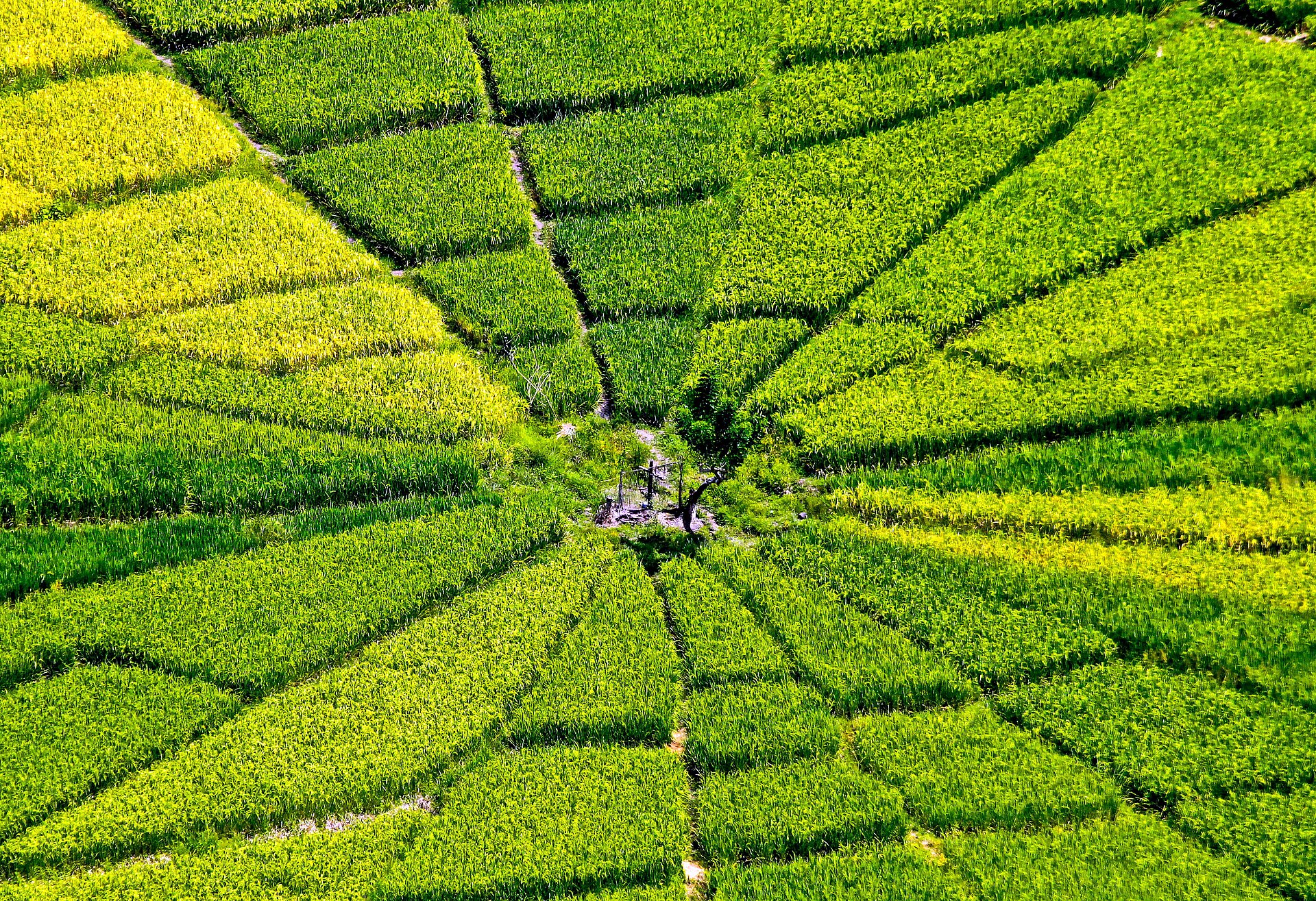
From the top of a small hill near the village of Cancar, the valley below looks like it has been caught in a set of giant spider web rice fields. Each field is a circle split into long, thin wedges that meet at the centre, and together they form a pattern that seems almost too perfect to be real. Locals call them lingko, and the sight is one of the most memorable stops on the road across Flores.
Cancar lies just off the Trans-Flores Highway between Labuan Bajo and Ruteng, so the fields are easy to include on any overland journey through Manggarai. Many travellers visit them on a private Flores tour from Labuan Bajo, together with Ruteng and the Liang Bua cave.
The lingko system: how Manggarai land is divided
The spider web shape is not decoration but a traditional way of sharing communal land. In Manggarai custom, land belonging to a village clan is divided by the tu’a teno, the elder responsible for land distribution. He begins at a central point called the lodok, where a wooden post is set in the ground during a ceremony, and from there lines are drawn outward to the edge of the field.
Each family receives a wedge, and its width at the outer edge reflects the family’s status and needs: families of higher standing or with more members traditionally receive wider slices. The same circular pattern echoes the Manggarai idea of unity, with the village drum house, the round village plan and the lingko all built around a centre. Similar lingko fields exist across Manggarai, but Cancar has the largest and most clearly visible group.
The viewpoint at Weol hill
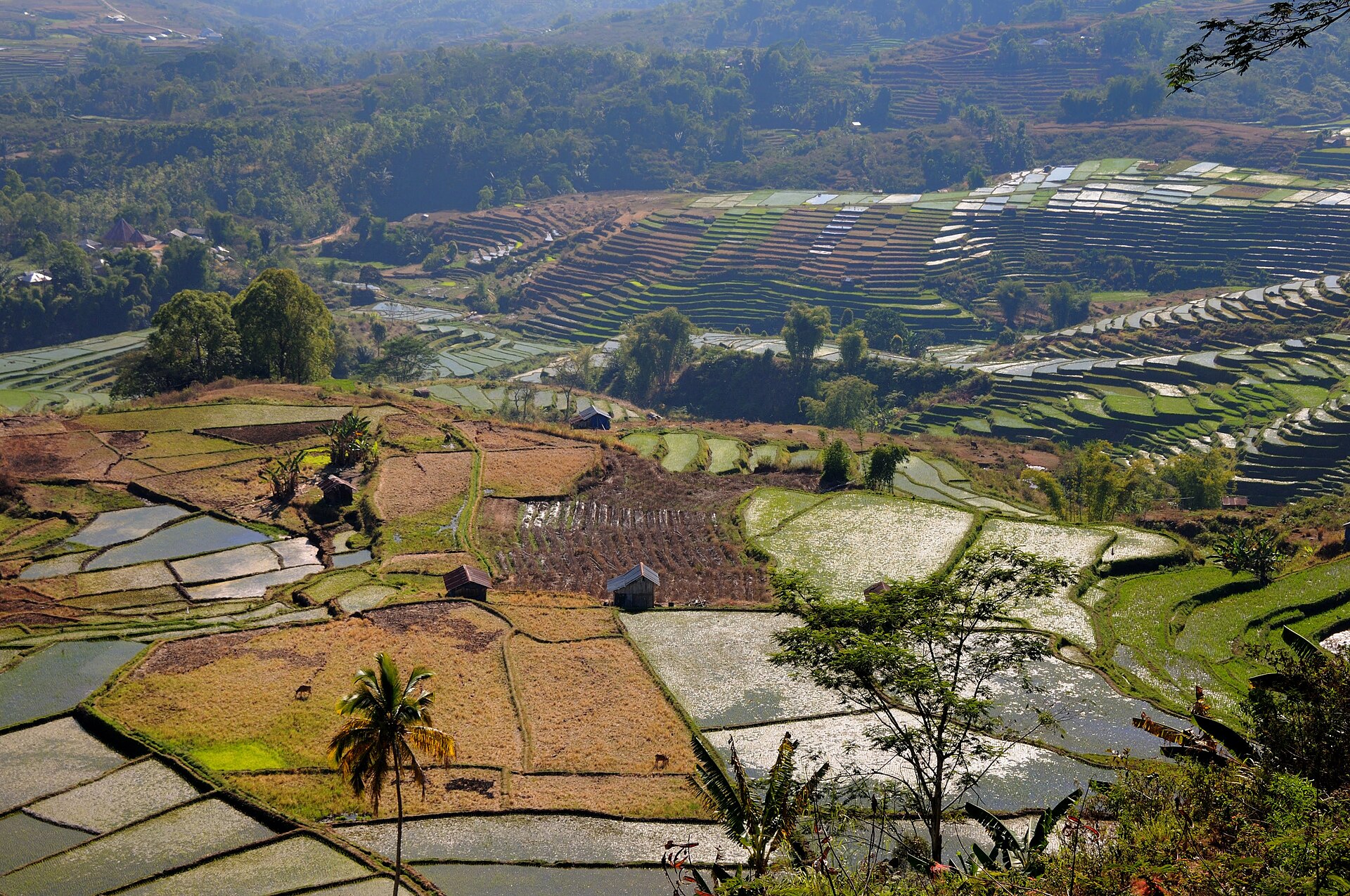
The classic view is from Weol hill in the village of Cara, on the edge of the Cancar area. Drivers stop at the roadside, where a small post collects the entrance fee or donation, roughly IDR 20,000–25,000 per person. The amount is set locally and may change, and the money helps maintain the path and the hilltop.
From there a steep, stepped path climbs for about 10–15 minutes through gardens to the top. Several spider web fields spread out below, with the Manggarai mountains behind. Take your time: the patterns become clearer the longer you look, and the light changes as clouds pass. There is little shade at the top, so bring water and a hat.
Best time to visit Cancar
The fields can be seen all year because the dividing lines are permanent, but their colour depends on the rice cycle. Planting usually follows the start of the rains, so from around January to March the fields tend to be bright green, turning yellow and golden just before harvest. Some fields with irrigation are planted twice a year, so the pattern can also be green or golden at other times. After harvest the fields are brown, though the shape is still clearly visible. Your guide can ask locally what stage the rice is at.
Morning is the best time of day: the light is soft, the air is clearer and clouds tend to build over the hills by midday. Late afternoon can also be pleasant, but rain is more likely in the wet season.
How to get there and what to combine
Cancar is about 3 to 3.5 hours by road from Labuan Bajo, travelling east through Lembor and up into the cooler hills of Manggarai. From the viewpoint it is around 30 minutes more to Ruteng, the main town of the region, with hotels, cafes and a large cathedral.
- Liang Bua cave: about 14 km north of Ruteng, where the remains of Homo floresiensis, the so-called hobbit, were discovered in 2003. A small museum explains the find.
- Ruteng: a highland town surrounded by coffee and rice; good for an overnight stop.
- Wae Rebo: the cone-house village is a further drive south and makes a good next step on a longer tour.
- Bajawa and Kelimutu: if you are crossing Flores overland, Cancar is usually the first big stop on day one.
Rice, coffee and life in the Manggarai highlands
The drive from Labuan Bajo to Cancar is a good introduction to the Manggarai highlands. After the dry coastal hills around Labuan Bajo, the road passes the wide rice plains of Lembor, one of the most important rice-growing areas of western Flores, before climbing into greener, cooler country with bamboo, coffee and clove gardens. Along the way you will see villages with Catholic churches, roadside stalls selling fruit and farmers carrying tools to the fields.
Rice farming here is still largely done by hand. Families work their own wedges of the lingko, but planting and harvesting are often shared, with neighbours helping each other in turn. If you visit at harvest time you may see groups cutting rice with small knives and threshing it in the fields. A local guide can explain the ceremonies that mark these moments, including the thanksgiving festival Penti, and introduce you to farmers willing to talk about their work. This context turns a quick photo stop into a real understanding of how Manggarai society is tied to its land.
Tips for visiting
A few practical points make the stop easier, especially if you are visiting with a driver on the way to Ruteng.
- Wear shoes with grip; the path up Weol hill is steep and can be slippery after rain.
- Bring small notes for the fee and for drinks sold at the roadside.
- Stay on the paths and do not walk on the bunds between the rice plots.
- Ask permission before flying a drone and before photographing farmers at work.
- A wide-angle lens helps capture the full circles from the top.
Tours that visit Cancar Spider Web Rice Fields
Flores Overland 5D4N
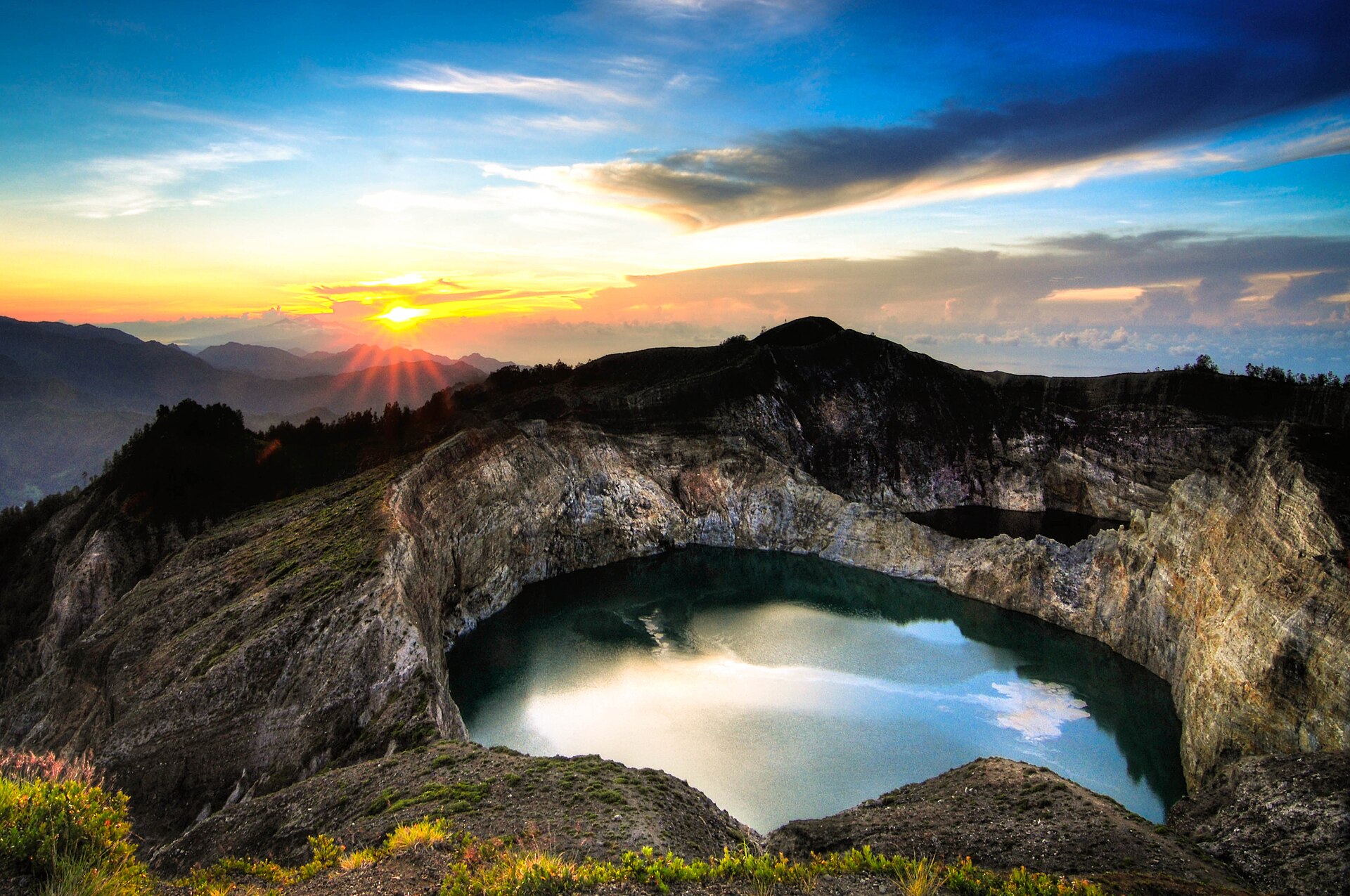
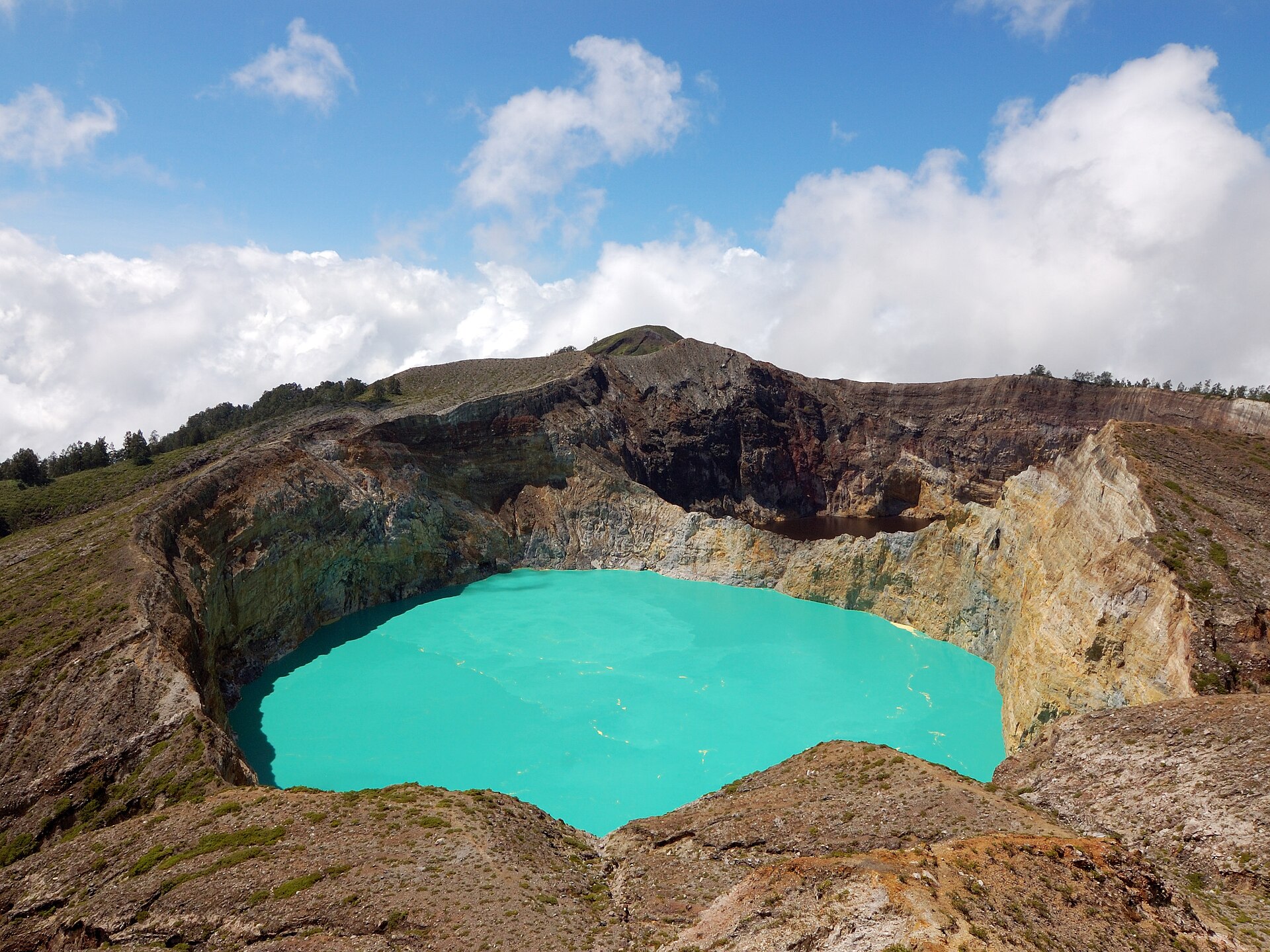
Cross Flores from west to east on a classic road trip: the spider-web rice fields of Manggarai, the Hobbit cave of Liang Bua, the megalithic village of Bena below Mount Inerie, the blue stones of Penggajawa beach and, as the grand finale, sunrise over the three coloured crater lakes of Kelimutu.
From USD 335 / IDR 5,500,000 · per person
Wae Rebo Village 2D1N
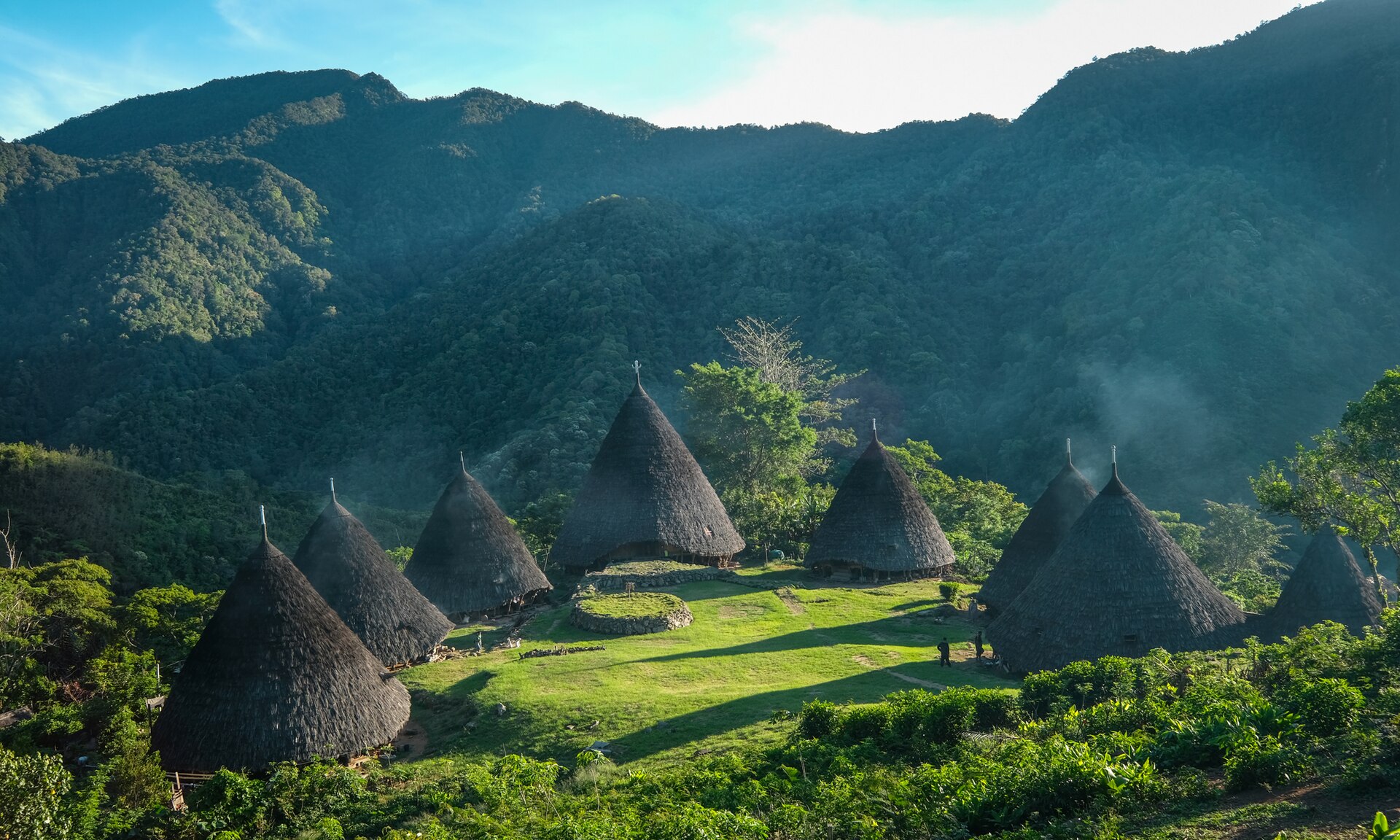
Hike through the rainforest to Wae Rebo, a village of seven cone-shaped Mbaru Niang houses at about 1,100 m in the mountains of Manggarai, and spend the night as a guest of the community.
From USD 135 / IDR 2,200,000 · per person
Komodo & Flores 8D7N
The complete Flores experience: three days sailing through Komodo National Park on a phinisi boat, then five days by road across the island to the coloured lakes of Kelimutu.
From USD 535 / IDR 8,800,000 · per person
Frequently asked questions
Where are the spider web rice fields in Flores?
In the Cancar area, about 17 km west of Ruteng in Manggarai Regency. The best viewpoint is on Weol hill in Cara village, a short climb from the main road.
How do I get to the spider web rice fields from Labuan Bajo?
Drive about 3–3.5 hours east on the Trans-Flores Highway towards Ruteng. Most people stop on the way to Ruteng as part of an overland tour.
Is there an entrance fee for the Cancar rice fields?
Yes, a small fee or donation of roughly IDR 20,000–25,000 per person is collected at the bottom of the path. It may change.
When is the best time to see the spider web rice fields?
In the morning. The fields are usually green from around January to March and golden just before harvest, but the pattern is visible all year.
Why are the rice fields shaped like a spider web?
They follow the Manggarai lingko system, in which clan land is divided from a central point called the lodok into wedges, one for each family.
More destinations
Want to see it for yourself?
Tell us your dates and the places you would like to visit – we put together the best trip for you.