
Komodo Dragons & Komodo Island: The Complete Guide (2026)
Komodo dragons live in the wild only on Komodo Island, Rinca and a few neighbouring corners of eastern Indonesia, a short boat ride from our home port of Labuan Bajo. This complete guide explains the animal itself, how the park protects it, how to see dragons safely and how to plan a trip around Komodo Island.
Key takeaways
- Komodo dragons (Varanus komodoensis) are the world’s largest living lizards and live wild only in and around Komodo National Park and parts of western and northern Flores.
- You can only walk in dragon habitat with a park ranger, at Loh Liang on Komodo Island or Loh Buaya on Rinca Island. Padar Island has no dragons.
- The species has been listed as Endangered by the IUCN since 2021; the park, founded in 1980, is a UNESCO World Heritage Site since 1991.
- A speedboat day trip from Labuan Bajo starts from IDR 1,450,000; the popular 3-day phinisi open trip starts from IDR 2,800,000 per person.
- Park entrance fees are paid per person on top of the tour price and confirmed in your quotation.
What are Komodo dragons?
The Komodo dragon (Varanus komodoensis) is a monitor lizard and the largest living lizard on Earth. Big adult males commonly reach around 2.5 to 3 metres from nose to tail, and the heaviest wild individuals can weigh 70 kilograms or more; females are noticeably smaller. Locals in the Komodo villages call the animal ora, and in English it was nicknamed a “dragon” soon after Western scientists described it in the early 20th century.
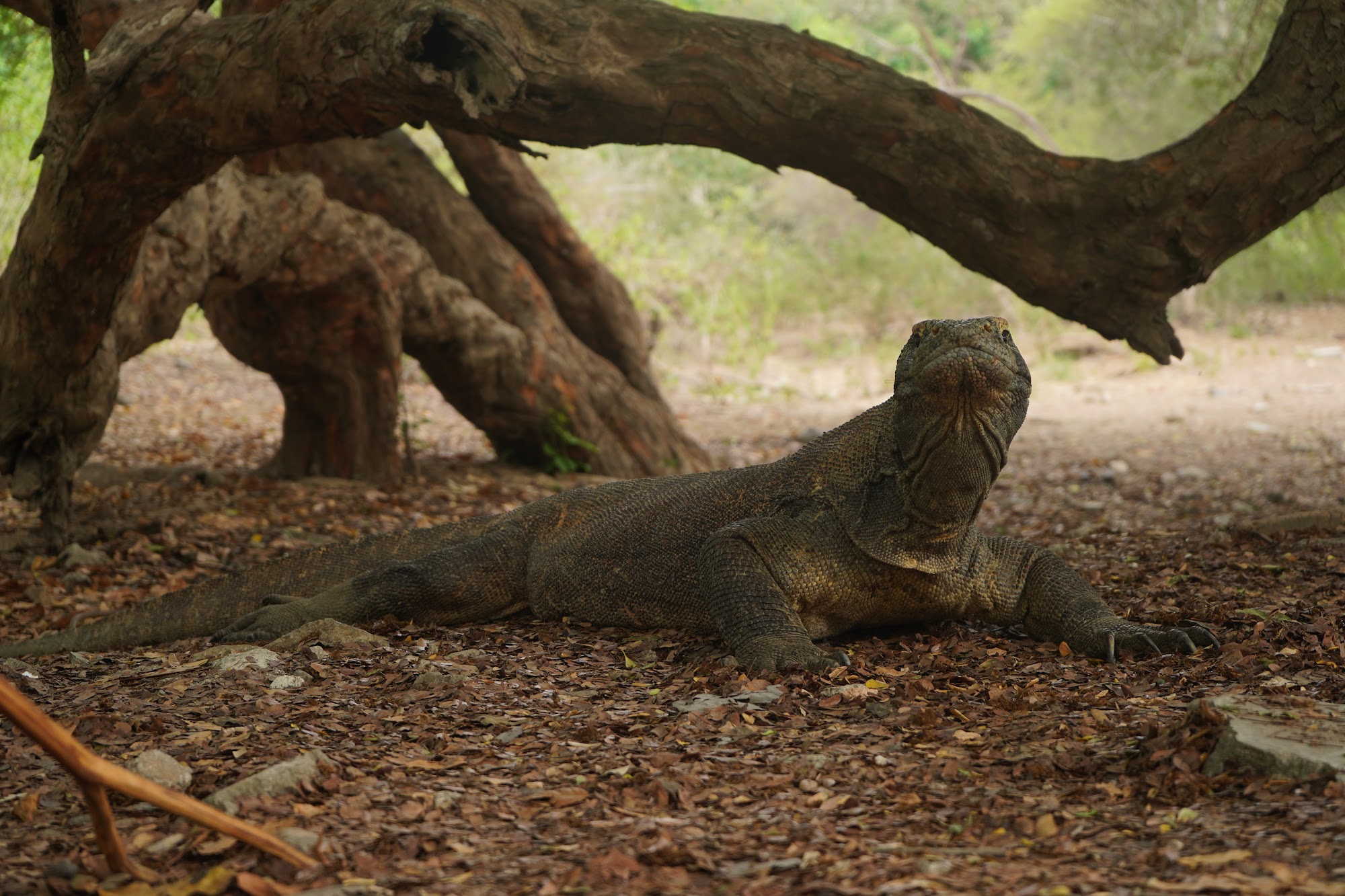
Seen up close, a Komodo dragon looks prehistoric: armoured grey-brown skin, a heavy muscular tail, curved claws and a long yellow forked tongue that flicks constantly to “taste” the air. That tongue is the dragon’s main sense for finding food, and it can pick up the scent of a carcass from a long way off. Most of the day they look lazy, lying flat in the sun or the shade, but over short distances they can move surprisingly fast.
For most travellers, seeing Komodo dragons is the reason the trip to Labuan Bajo exists in the first place. In this guide we cover the animal, its conservation, Komodo Island and the surrounding park, and the practical side of planning, with links to our detailed guides along the way. If you only want the trek details, read our guide to ranger treks on Komodo and Rinca.
Where do Komodo dragons live?
Wild Komodo dragons are found in a tiny area of eastern Indonesia and nowhere else on the planet. Most of them live inside Komodo National Park, on Komodo Island and Rinca Island, with small populations on the islets of Gili Motang and Nusa Kode. Outside the park, dragons also survive in a few patches along the western and northern coast of Flores, mostly in protected areas that tourists rarely visit.
Their habitat is unusual for Indonesia: hot, dry savannah with lontar palms, open grassland that turns golden in the dry season, and pockets of monsoon forest in the valleys. This dry climate, with a long dry season and a short wet season, is part of the reason the dragons thrive here and not on the greener islands further west.
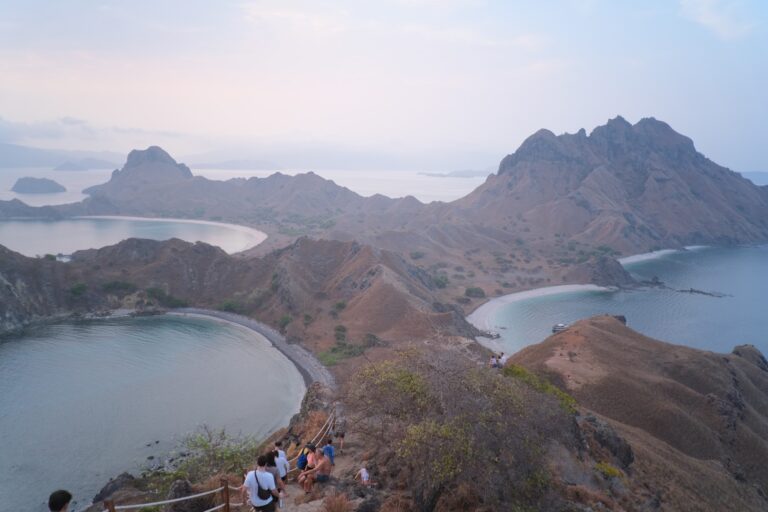
One common surprise: there are no Komodo dragons on Padar Island today. Padar is famous for its viewpoint over three bays, and almost every tour stops there, but you go for the landscape, not the wildlife. Read our Padar Island hike guide for the details. If seeing dragons is your priority, make sure your itinerary includes a ranger trek on Komodo or Rinca, which all our Komodo boat trips do.
How Komodo dragons hunt and eat
Komodo dragons are the top predators of their islands. Adults eat almost anything they can overpower or find: Timor deer, wild boar, water buffalo, smaller dragons, and a lot of carrion. Their usual strategy is the ambush. A dragon waits motionless beside a game trail, lunges at passing prey and inflicts deep wounds with its serrated, shark-like teeth. Prey that escapes often weakens and dies later, and the dragons follow it, guided by smell.
For many years the popular explanation was that the dragon’s saliva is full of deadly bacteria that infect the bite. More recent research has found that dragons have venom glands in the lower jaw, and many scientists now think the venom, which interferes with blood clotting and lowers blood pressure, plays a bigger role than bacteria, combined with blood loss from the bite itself. The debate is not completely closed, but “venomous lizard” is the description you will hear from most rangers today.
Dragons can eat a very large share of their own body weight in a single meal, then go a long time without feeding. That is why the dragons you see near the ranger stations are often resting and digesting. Rangers do not feed them; what you see is natural behaviour.
Breeding, nesting and the life of a Komodo dragon
Mating takes place mainly in the middle of the dry season, roughly between June and August, when males can be seen wrestling, standing up on their hind legs and grappling. Females lay their eggs around August and September, often in the abandoned mound nests of the orange-footed scrubfowl or in burrows dug into hillsides, and guard the nest site for a while. The eggs incubate for many months, and the young usually hatch around the start of the following dry season.
Hatchlings are small, colourful and very vulnerable, including to adult dragons. For their first years they live mostly in trees, eating insects, geckos and birds, and only come down to the ground once they are large enough to be safe. Dragons are thought to live for several decades in the wild, often quoted as up to around 30 years.
A fascinating detail: female Komodo dragons in zoos have produced offspring without a male (parthenogenesis), something documented by scientists in the 2000s. Whether this matters in the wild is still discussed, but it is a good story for the boat ride back. During the nesting period some trails may be adjusted or closed by the park, which your guide will know about on the day.
Conservation: Komodo National Park and an endangered species
Komodo National Park was established in 1980 to protect the Komodo dragon and its habitat, and its protection later expanded to the rich marine life around the islands. In 1991 the park was inscribed as a UNESCO World Heritage Site. Today it covers Komodo, Rinca, Padar and many smaller islands, plus a large area of sea with some of the most diverse coral reefs in Indonesia.
In 2021 the IUCN moved the Komodo dragon from Vulnerable to Endangered, mainly because the species lives in such a small range and is expected to be hit by rising sea levels and habitat loss, especially outside the park. The total wild population is usually estimated at a few thousand animals, with the largest numbers on Komodo and Rinca. Inside the park, numbers are considered relatively stable thanks to strict protection and the presence of rangers.
Tourism plays a role here too. Park entrance fees help fund management and ranger patrols, and the park authorities regularly adjust rules, quotas and registration to limit pressure on the most visited sites. As a local operator, we follow those rules, keep our groups with the rangers and ask guests not to buy coral, turtle shell or other protected products. Our guide to Komodo National Park entrance fees explains how the fee system works without quoting numbers that change.

Komodo Island: the island of the dragons
Komodo Island is the largest island in the park and gives the dragon its name. Most boats land at Loh Liang, the ranger station on the north-east coast, where you register, meet your ranger and get a short safety briefing before the walk. Treks range from a short loop of under an hour, which is what most day trips do, to longer walks to hilltops with views over the bay. The landscape mixes tamarind trees, lontar palms, dry riverbeds and grassy hills, and you often see deer, wild boar and birds along the way.
Komodo Island is also home to Kampung Komodo, a fishing village whose people have lived alongside the dragons for generations. A local legend says that the first dragon and the first human were twins, which is one reason the villagers traditionally respect the ora. Some itineraries include a short village stop where you can buy wooden dragon carvings and pearls; modest clothing is appreciated.
The other option is Rinca Island, closer to Labuan Bajo, with its ranger station at Loh Buaya and an elevated boardwalk where dragons often rest right below you. Rinca is popular on the first day of sailing trips, while Komodo Island fits neatly into day trips because Pink Beach is next door. We compare both, with trek lengths and tips, in our guide to Komodo Island and Rinca Island.
Is it safe to see Komodo dragons? Ranger rules
Yes, as long as you follow your ranger. Serious incidents with tourists are very rare, and they almost always involve people ignoring the rules. Every group walks with at least one park ranger, who carries a long forked stick used to gently push back a curious dragon. The rangers know the individual animals and their habits well, and they decide how close the group can go.
- Stay with your ranger and your group at all times, and never leave the trail.
- Keep a safe distance, at least several metres, and more whenever the ranger asks. Never stand between two dragons.
- Do not bring food out on the trail and never feed, touch or tease a dragon.
- Rangers commonly advise visitors with an open wound, and women who are menstruating, to let them know discreetly, because dragons react strongly to the smell of blood. The ranger will simply adjust the walk.
- Keep children close to you and holding hands near the animals. Families are welcome, and our private family trip lets you set your own pace.
- Walk calmly, do not run, and avoid sudden movements or loud noises. No drones without a park permit.
- Wear closed shoes, a hat and sunscreen, and carry water: the trails are hot and dusty, even in the morning.
What else to see around Komodo Island
The dragons are the headline, but the waters and islands around Komodo Island are just as memorable. Most trips combine a ranger trek with hiking viewpoints, beaches and some of the best snorkelling in Indonesia. These are the highlights you will hear about most:
- Padar Island – the iconic viewpoint over three bays with white, black and pink sand. Best at sunrise; our guide to Padar Island has the timings.
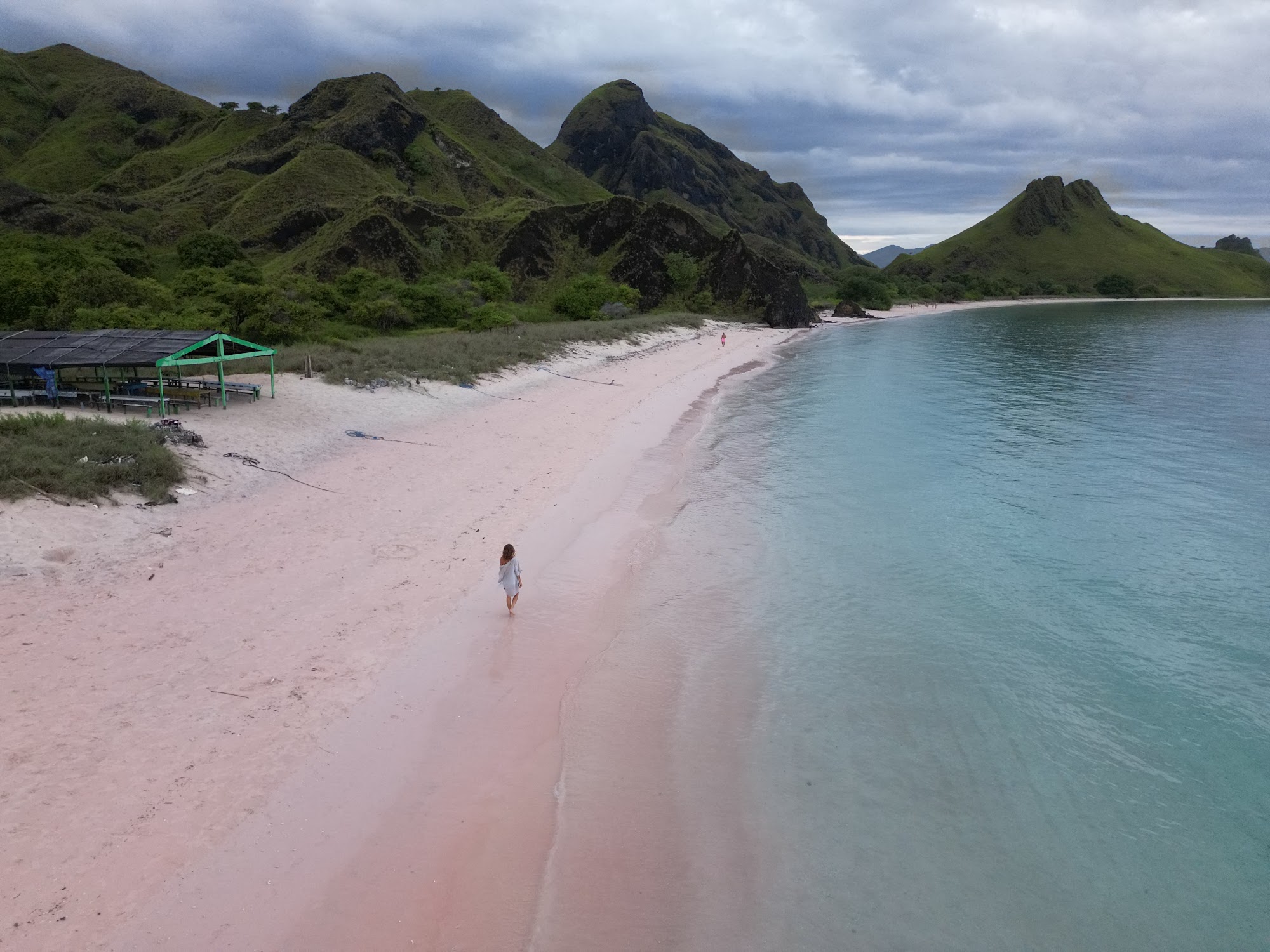
- Pink Beach – the famous pink-tinted sand on the coast near Komodo Island, with a healthy reef close to shore. See our Pink Beach guide.
- Manta Point – a current-swept channel where manta rays come to feed and be cleaned. Sightings are common but never guaranteed; read about snorkelling with mantas at Manta Point.
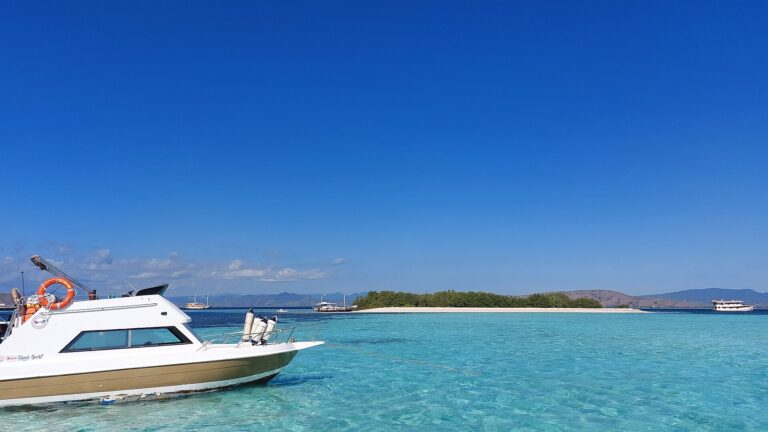
- Taka Makassar – a crescent-shaped sandbar in turquoise water, appearing and disappearing with the tide. More in our Taka Makassar sandbar guide.
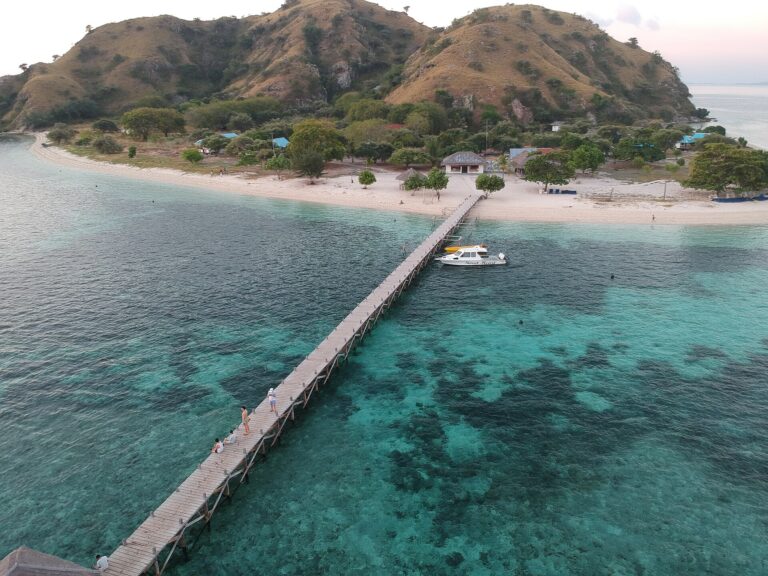
- Kanawa Island – an easy snorkelling stop with a house reef, often with turtles. See Kanawa Island.
- Kelor Island – a short, steep hike for a first panorama, close to Labuan Bajo. Read about Kelor Island.
- Manjarite and Siaba Besar – calm coral gardens and Turtle Bay, ideal for beginners. See snorkelling at Manjarite and Siaba Besar.
- Kalong Island – at sunset, thousands of flying foxes leave the mangroves and fly towards Flores. Our Kalong Island flying foxes guide explains the best spot to watch.
Kelor, Kanawa and Kalong are also covered on the relaxed half-day sunset trip to Kalong Island, a nice extra on your arrival or departure day. It does not include dragons, though, as Komodo and Rinca are further away.
How to visit Komodo Island and see the dragons
There are three main ways to see Komodo dragons from Labuan Bajo: a fast day trip, a sailing trip of two or three days on a phinisi boat, or a private trip. All of them include a ranger trek on Komodo or Rinca, and they differ mostly in pace, comfort and how many other places you see. The table below gives a quick overview.
| Trip | Duration | Dragons | Best for | From |
|---|---|---|---|---|
| Komodo day trip by speedboat | 1 day | Komodo Island | Short stays, sleeping on land | IDR 1,450,000 pp |
| Private speedboat day tour | 1 day | Komodo Island | Families, couples, photographers | Price per boat, shared by the group |
| 2D1N Komodo sailing trip | 2 days, 1 night | Rinca Island | A first taste of life on board | IDR 2,950,000 pp |
| 3-day Komodo phinisi open trip | 3 days, 2 nights | Komodo Island | The full experience at a relaxed pace | IDR 2,800,000 pp |
| Private phinisi charter | 3 days, 2 nights | Komodo and/or Rinca | Groups, special occasions | IDR 40,500,000 per boat |
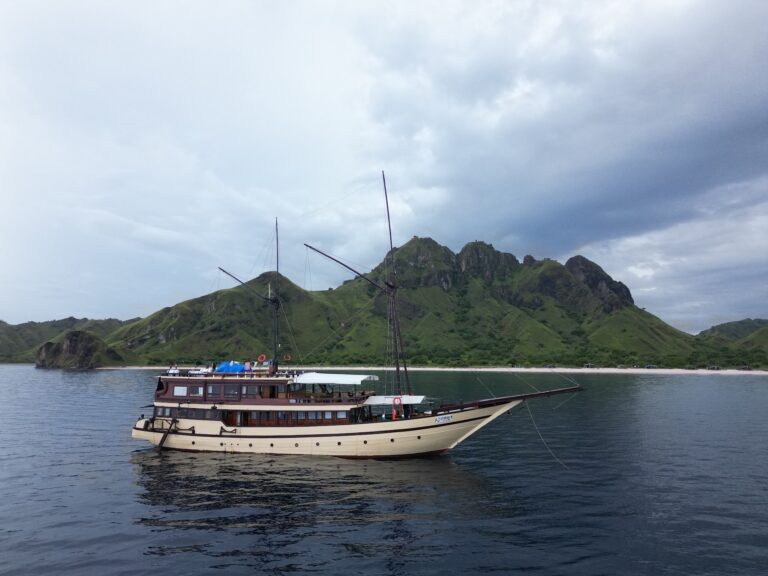
The day trip covers Padar, Pink Beach, Komodo Island, Manta Point, Taka Makassar and Kanawa in one long day, returning to Labuan Bajo in the late afternoon. It is great value, but busy. A sailing trip lets you sleep on a traditional phinisi, catch Padar at sunrise before the day boats arrive and add quieter stops. Our most popular choice, the 3-day open trip from IDR 2,800,000 per person, is booked per cabin, so solo travellers and couples share the boat with other guests.
Unsure which format suits you? We wrote an honest comparison of the open trip or private charter question, an overview of phinisi cabin types from shared bunks to private suites, and a guide to how much a Komodo trip costs once fees, transfers and extras are added. To see every boat side by side with live cabin availability, compare all 29 Komodo boats. Couples can also look at our small-boat Komodo honeymoon trip.
Best time to see Komodo dragons
You can see Komodo dragons all year round. The dry season, roughly April to November, brings sunny days, calmer seas and the classic golden savannah, and it is the busiest period, especially July and August. The wet season, roughly December to March, turns the hills green and the park quieter, with short tropical showers and occasionally rougher seas. Our article on the best time to visit Komodo goes through the months one by one.
Time of day matters more than the month. Dragons are cold-blooded, so they warm up in the morning sun and are most active early in the day and again late in the afternoon. At midday they mostly lie in the shade. Day trips reach Komodo Island around late morning, which still gives very good sightings; sailing trips can often plan the trek earlier. The mating season (around June to August) can bring more visible activity, while during nesting some trails may be closed.
Komodo National Park fees, permits and booking
Every visitor pays Komodo National Park entrance fees, plus ranger and local fees at the trek sites. These are charged per person, are not part of the boat price, and have changed several times in recent years, so we do not quote numbers here. We confirm the current amounts in your quotation and arrange the registration for you; in recent seasons the park has also used visitor quotas and advance registration for the busiest sites. For the full explanation, see Komodo park fees explained.
Booking with us is simple: a 30% deposit secures your seats or cabin, and the balance is paid at the latest the day before the trip. Our booking terms and frequently asked questions cover cancellations, weather and what is included. For a day-by-day plan that fits your dates, see our Komodo itinerary guide.
Getting to Labuan Bajo and combining Komodo with Flores
Labuan Bajo, on the western tip of Flores, is the gateway to Komodo Island. Most travellers fly in from Bali or Jakarta to Komodo Airport, a few minutes from the harbour. Our guide on how to get to Labuan Bajo covers flights, ferries and timing. A more adventurous option is to arrive by sea on the Lombok to Labuan Bajo sailing trip, which visits Moyo and Satonda before reaching the dragons.
Plan at least one night in town before or after your boat trip; our Labuan Bajo travel guide and our tips on where to stay in Labuan Bajo help with that. Many guests then continue overland into Flores, an island of volcanoes, rice terraces and traditional villages:
- Wae Rebo, the mountain village of cone-shaped houses, on our Wae Rebo 2-day tour.
- The spider-web rice fields of Cancar near Ruteng and the forest of Nuca Molas.
- The coloured crater lakes of Kelimutu, included on the 5-day Flores overland tour.
- Ready-made combinations such as Komodo and Wae Rebo in 5 days or the 8-day Komodo and Flores tour.
See all options on our Flores overland tours page.
Practical tips for your Komodo trip
A few things we tell every guest before they visit Komodo Island and the dragons:
- Wear light, breathable clothes and closed shoes or sturdy sandals for the ranger trek and the Padar hike.
- Bring reef-safe sunscreen, a hat, sunglasses and a refillable water bottle. Our Komodo packing list has the full checklist.
- Bring some cash in rupiah for village souvenirs, drinks and tips; there are no ATMs on the islands, so withdraw cash in Labuan Bajo before the trip.
- Seasickness tablets help on day trips if the sea is choppy, especially in the open channels.
- Follow the ranger’s photo instructions: a zoom lens or phone zoom is better than stepping closer.
- Book early for July, August and the end-of-year holidays, when the best cabins sell out. Browse all our Komodo tours or message us on WhatsApp for advice.
Tours mentioned in this guide

3D2N Phinisi Open Trip
Our most popular trip and the best way to experience Komodo at a relaxed pace.
From USD 170 / IDR 2,800,000 · per person, sharing room
Komodo Day Trip by Speedboat
The best way to see the highlights of Komodo National Park in one day.
From USD 90 / IDR 1,450,000 · per person

2D1N Komodo Sailing Trip
Spend a night on a traditional phinisi boat inside Komodo National Park.
From USD 180 / IDR 2,950,000 · per person, sharing cabin
Frequently asked questions
Where can you see Komodo dragons in the wild?
Only in eastern Indonesia: mainly on Komodo Island and Rinca Island in Komodo National Park, plus a few smaller islets and parts of western and northern Flores. Visitors see them on ranger treks at Loh Liang (Komodo) or Loh Buaya (Rinca).
Are there Komodo dragons on Padar Island?
No. Padar is part of Komodo National Park and famous for its viewpoint, but no dragons live there today. To see dragons you need a ranger trek on Komodo or Rinca, which all our Komodo tours include.
Are Komodo dragons dangerous to tourists?
They are powerful, venomous predators, but visits are safe when you stay with your ranger, keep your distance and follow the briefing. Incidents with tourists are very rare.
Can I visit Komodo Island in one day from Labuan Bajo?
Yes. A speedboat day trip visits Padar, Pink Beach, Komodo Island, Manta Point, Taka Makassar and Kanawa and returns the same afternoon. If you have more time, a 2- or 3-day phinisi trip is more relaxed.
Why are Komodo dragons endangered?
The IUCN listed them as Endangered in 2021 because they live in a very small area that is vulnerable to rising sea levels and habitat loss. Inside Komodo National Park they are strictly protected.
How much does it cost to see the Komodo dragons?
Tours start from IDR 1,450,000 per person for a shared day trip. Park entrance and ranger fees are paid per person on top and confirmed in your quotation, as the rates change.
More trip-planning guides
- How Much Does a Komodo Trip Cost? Full Budget Breakdown 2026
- Komodo Open Trip vs Private Charter vs Speedboat: Which Should You Choose?
- Komodo Itinerary: 1 Day, 2D1N or 3D2N? Sample Plans for 2026
- Komodo Phinisi Boats & Cabin Types Explained: How to Choose Your Boat
Need help planning?
Send us your dates, group size and budget – we reply on WhatsApp with honest advice and a clear quotation.