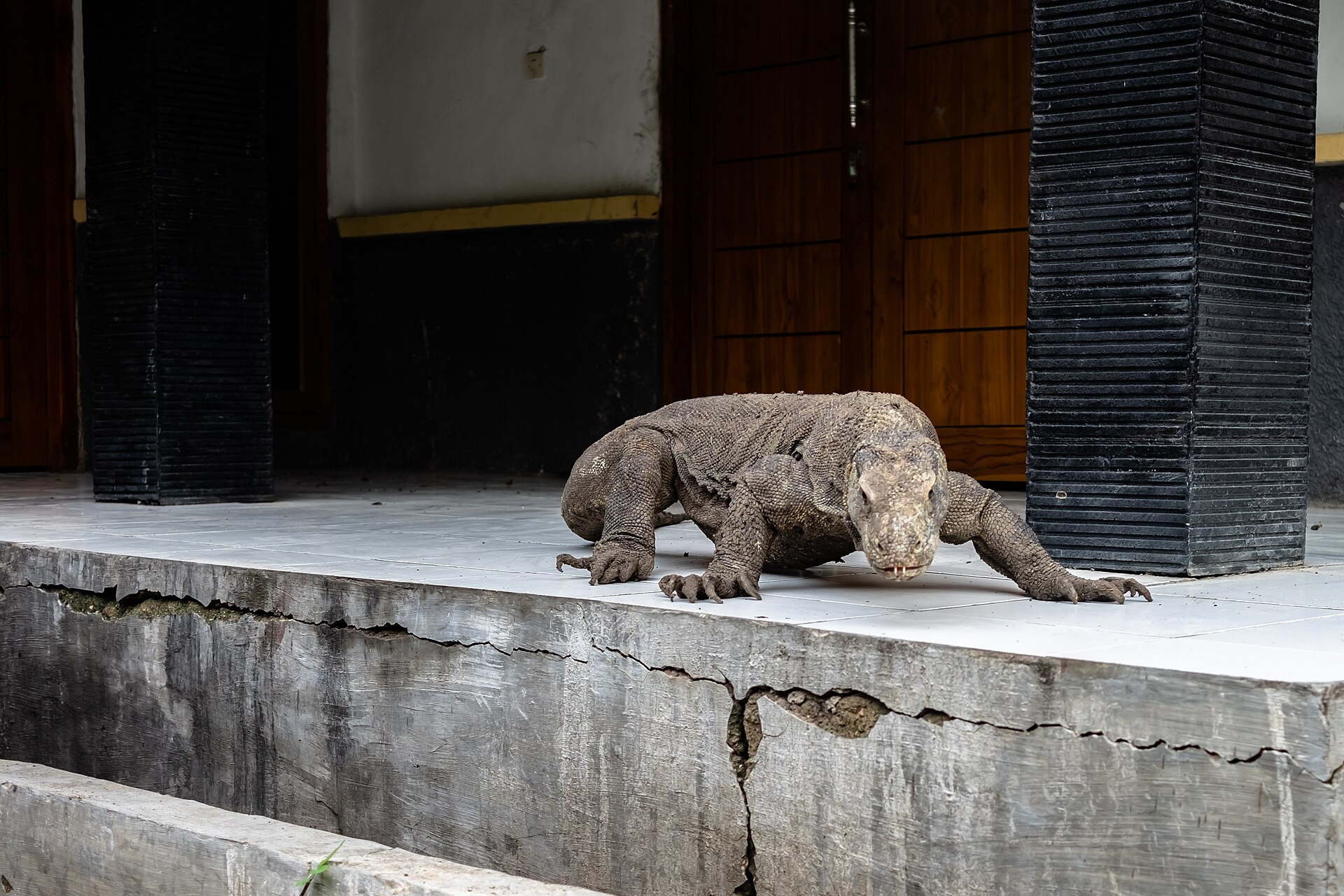
Komodo Island & Rinca Island: Where to See Komodo Dragons in the Wild
Komodo and Rinca are the only places on a typical Labuan Bajo trip where you can walk among wild Komodo dragons with a ranger. This guide explains how the treks work, which island to choose and how to stay safe.
Quick facts
| Where | Loh Liang (Komodo Island) and Loh Buaya (Rinca Island), Komodo National Park |
|---|---|
| Boat time from Labuan Bajo | Rinca about 1 hour by speedboat; Komodo about 1.5–2 hours |
| Trek length | From a short 30–60 minute loop to longer treks of several hours |
| Guiding | Every walk is led by a park ranger |
| Best time of day | Early morning or late afternoon, when the dragons are most active |
| Good for | Wildlife lovers, families with older children, first-time visitors |
Seeing Komodo dragons in their natural habitat
The Komodo dragon (Varanus komodoensis) is the world’s largest living lizard. Adult males can grow to around three metres and weigh more than 70 kilograms, and in the wild they are found only on a handful of islands in eastern Indonesia. Komodo National Park, a short boat ride from Labuan Bajo, protects most wild Komodo dragons, mainly on Komodo Island and Rinca Island.
Walking through the dry savannah and monsoon forest with a ranger, and suddenly finding a dragon lying across the trail, is one of the great wildlife experiences in Asia. These are wild animals, not a zoo display, so sightings are very likely but never guaranteed in a particular spot. Both islands are visited on tours from Labuan Bajo, and most itineraries include one of the two.
Komodo Island and Loh Liang
Komodo Island is the largest island in the park and gives its name to the dragon. Boats land at Loh Liang, the ranger station on the north-east coast, where you register, meet your ranger and receive a short safety briefing. Treks start right from the station.
Several trail options are offered. The short trek is a loop of roughly 1.5 to 2 kilometres and takes 30 to 60 minutes; this is what most day-trippers do. Medium and long treks of around 3 to 4.5 kilometres take one to two hours and reach viewpoints over the bay and the hills, with a better chance of spotting other wildlife. Longer adventure treks can sometimes be arranged in advance. Which trails are open depends on the season and on park management, and during the dragons’ nesting period some areas may be closed.
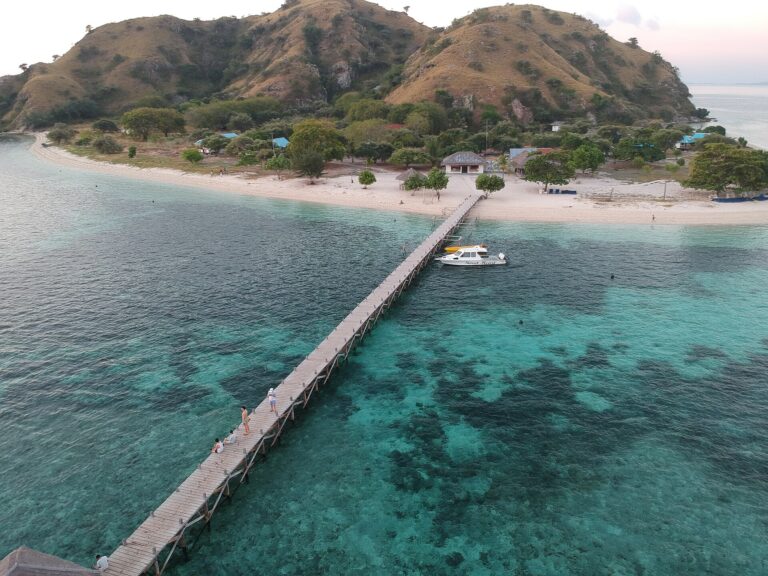
Komodo Island feels wilder and larger than Rinca, with tall tamarind trees, lontar palms and wide valleys. It is usually combined with Pink Beach, which lies only a short boat ride away.
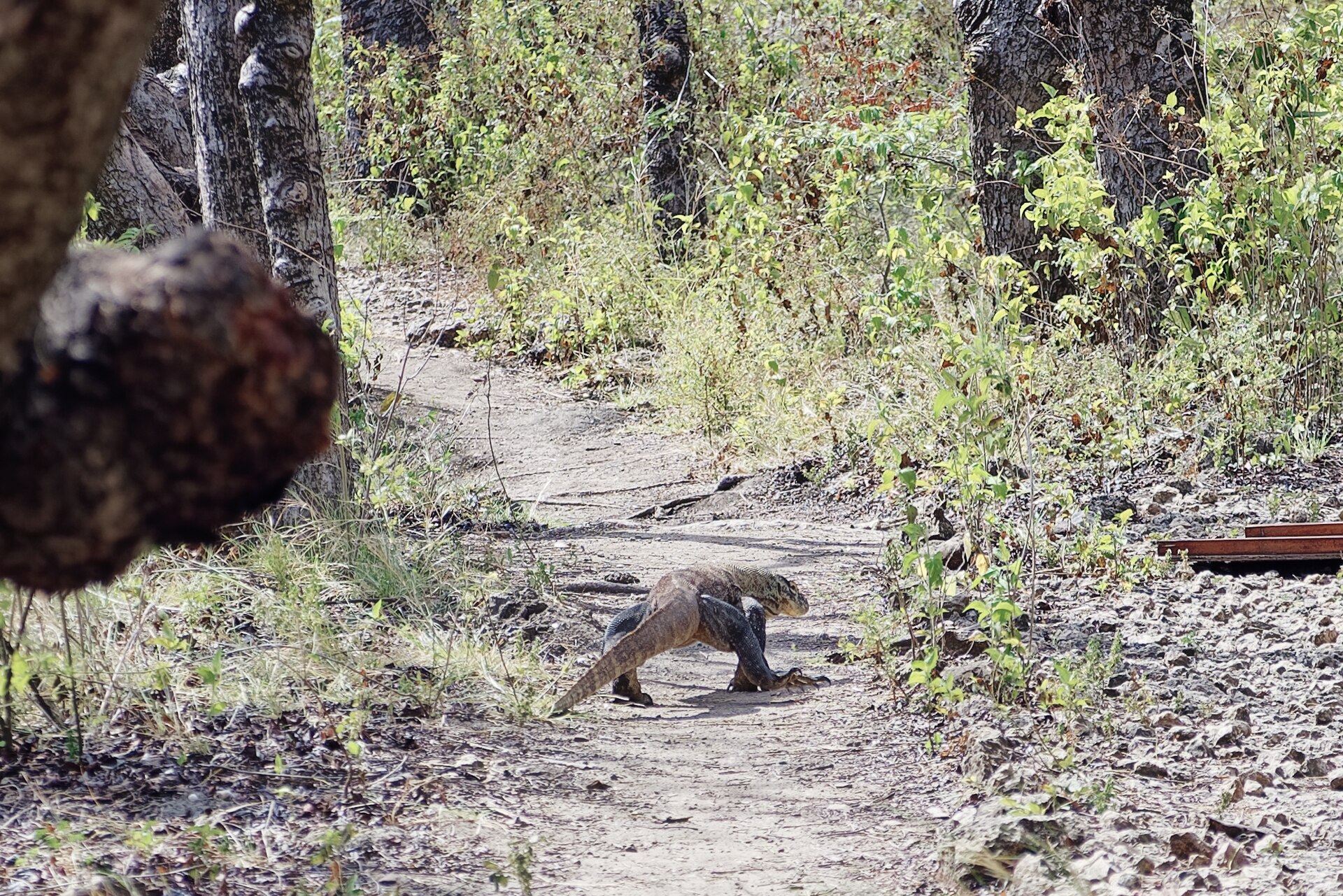
Rinca Island and Loh Buaya
Rinca Island is closer to Labuan Bajo and often the better choice when time is short. Boats moor at Loh Buaya, where a redeveloped visitor area opened in the early 2020s, with an elevated boardwalk that lets you watch dragons resting below without disturbing them. From there, rangers lead walks into the surrounding savannah and forest.
Rinca has a reputation for frequent sightings, partly because dragons tend to stay near the ranger station and the waterholes. Treks are generally shorter than on Komodo, typically 30 minutes to about 1.5 hours, and the landscape of bare hills and lontar palms is beautiful, if hot. Rinca is easy to fit into a day trip, or into the start of a longer liveaboard.
Is it safe to see Komodo dragons? Safety rules
Visits are safe when you follow the ranger, and serious incidents involving tourists are very rare. Dragons are powerful predators with a venomous bite, though, and can move surprisingly fast over short distances. Rangers carry long forked sticks and position the group so there is always plenty of space between you and the animals.
- Always stay with your ranger and your group; never wander off the trail.
- Keep a distance of at least five metres, more if the ranger asks.
- Do not feed, touch, tease or chase the dragons, and never try to get between two of them.
- Tell the ranger discreetly if you have an open wound or are menstruating; dragons have an excellent sense of smell.
- Walk quietly, and do not run or make sudden movements near a dragon.
- No flash photography close to the animals, and no drones without a park permit.
- Wear closed shoes, carry water and wear a hat: the trails are hot and dusty.
Best time of day and season to see dragons
Dragons are cold-blooded and spend the early morning warming up in the sun, then hunt or patrol before retreating to the shade in the heat of the day. The best time to walk is therefore early to mid-morning or late afternoon, which is also far more comfortable for you. Around midday you are still likely to see dragons, but they will mostly be lying still in the shade.
Sightings are possible all year. The dry season, roughly April to November, has clearer skies and calmer seas. Mating season falls around June to August, which can bring more activity, while females guard their nests later in the year and some trails may be adjusted then. In the wet season the hills turn green and the islands are quieter.
What else lives on Komodo and Rinca
The dragons share the islands with the animals they hunt and with a surprising range of birds. Keep your eyes open on the trail for:
- Timor deer, often grazing at the forest edge and the dragons’ main prey.
- Wild water buffalo and wild boar, especially around waterholes.
- Long-tailed macaques in the trees and on the beaches.
- The critically endangered yellow-crested cockatoo, which still survives in the park.
- Orange-footed scrubfowl, whose large earth mounds are sometimes used by dragons as nests.
- Green imperial pigeons, sea eagles and colourful kingfishers along the coast.
Komodo village and visiting on a tour
Komodo Island is also home to a fishing village, Kampung Komodo, whose people have lived alongside the dragons for generations and tell stories of the dragon as a sibling, Ora. Some tours stop briefly to visit the village and buy carvings or pearls; a respectful visit with modest clothing is always welcome.
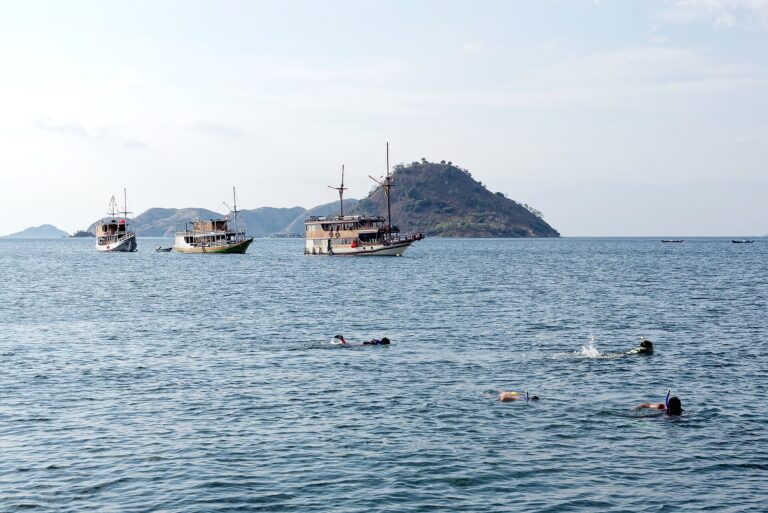
Practical details are simple. Park entry and ranger fees are paid per person and confirmed by your operator when booking, as rates change. Treks are organised at the ranger station, but under the park’s visitor quota introduced in 2026, visits are registered in advance, which your operator arranges. A one-day speedboat trip from Labuan Bajo usually includes Padar, Komodo Island and Pink Beach, while two- or three-day boat trips leave time for a longer trek and a visit to both islands.
Tours that visit Komodo Island & Rinca Island
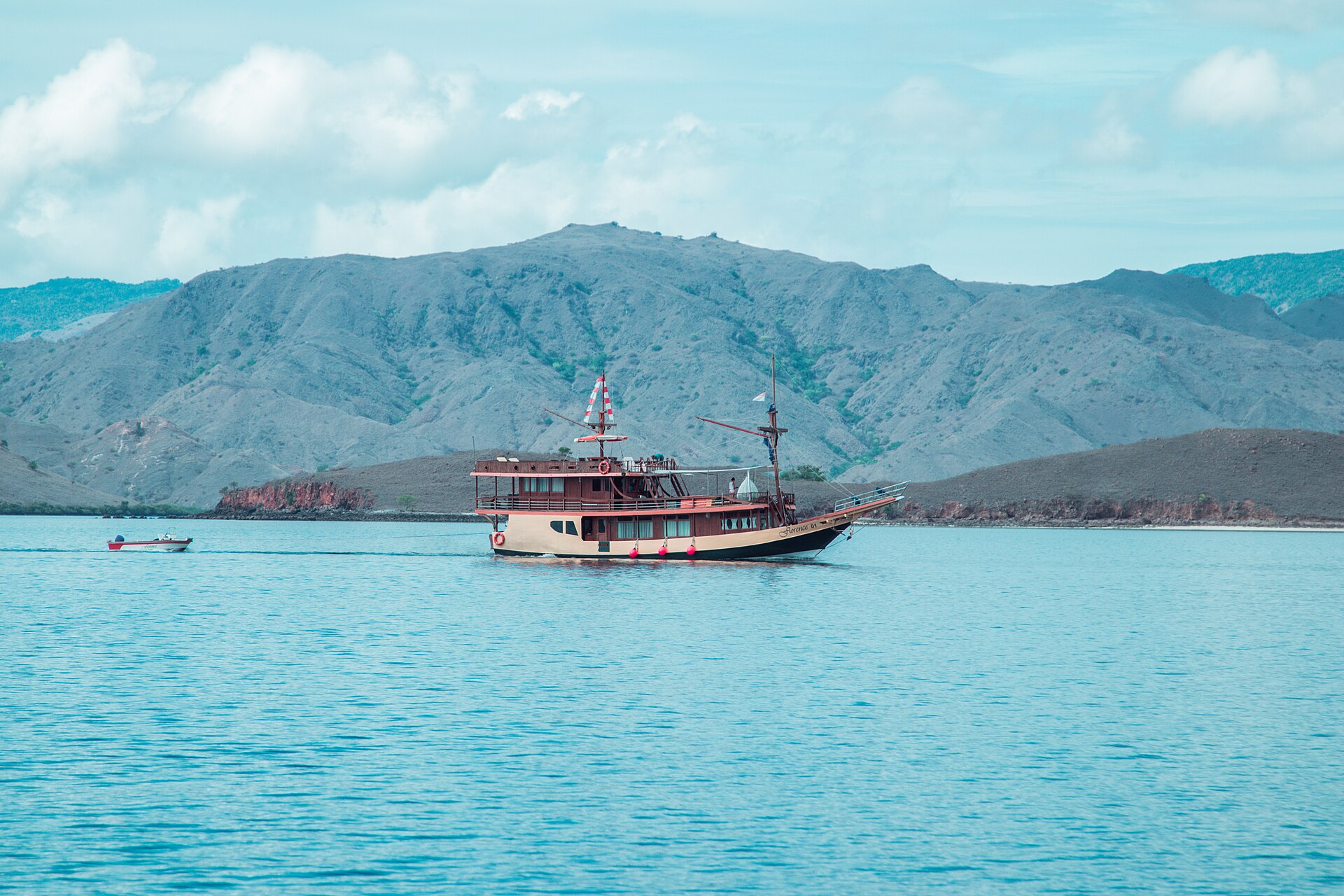
3D2N Phinisi Open Trip
Our most popular trip and the best way to experience Komodo at a relaxed pace.
From USD 170 / IDR 2,800,000 · per person, sharing room
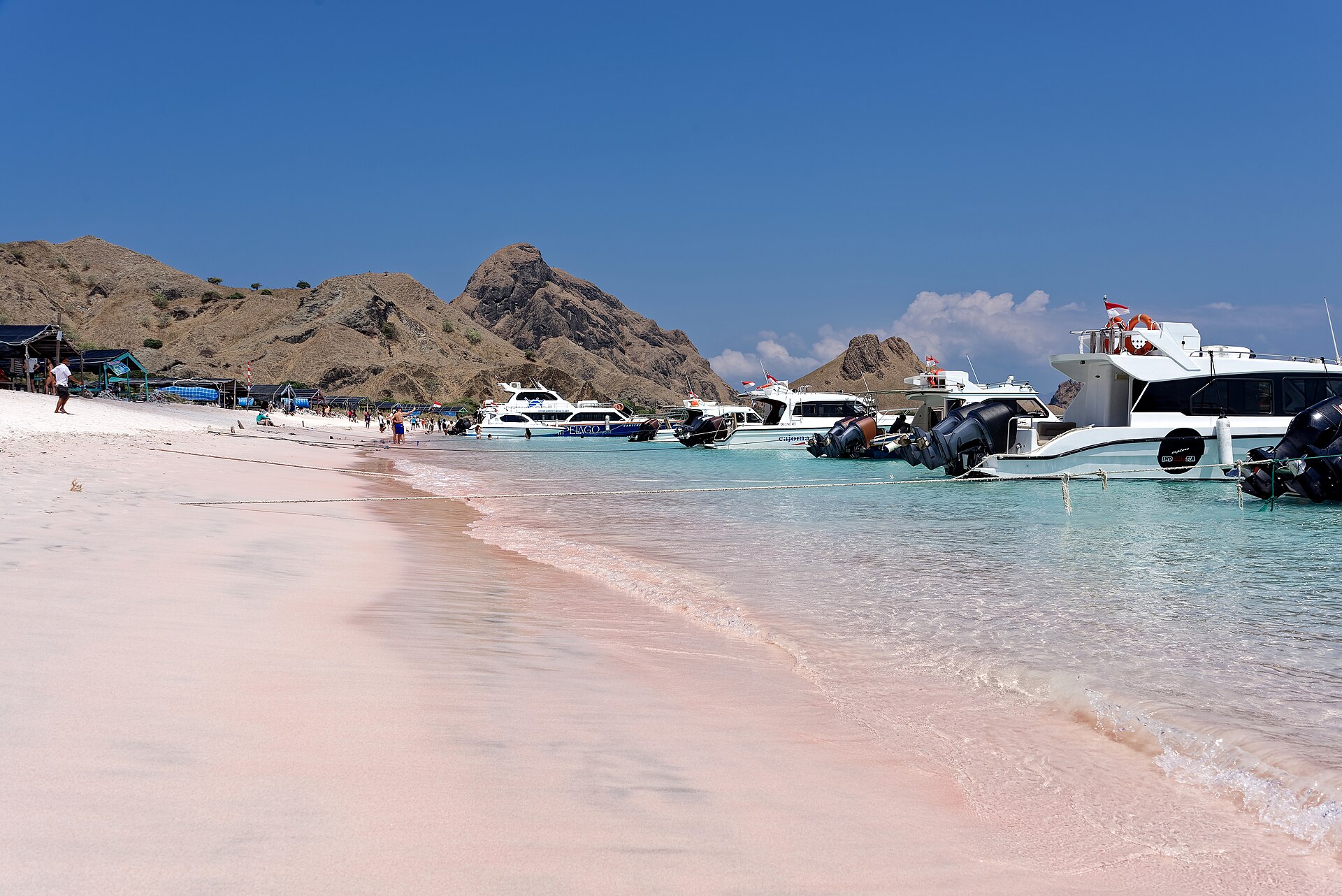
Komodo Day Trip by Speedboat
The best way to see the highlights of Komodo National Park in one day.
From USD 90 / IDR 1,450,000 · per person
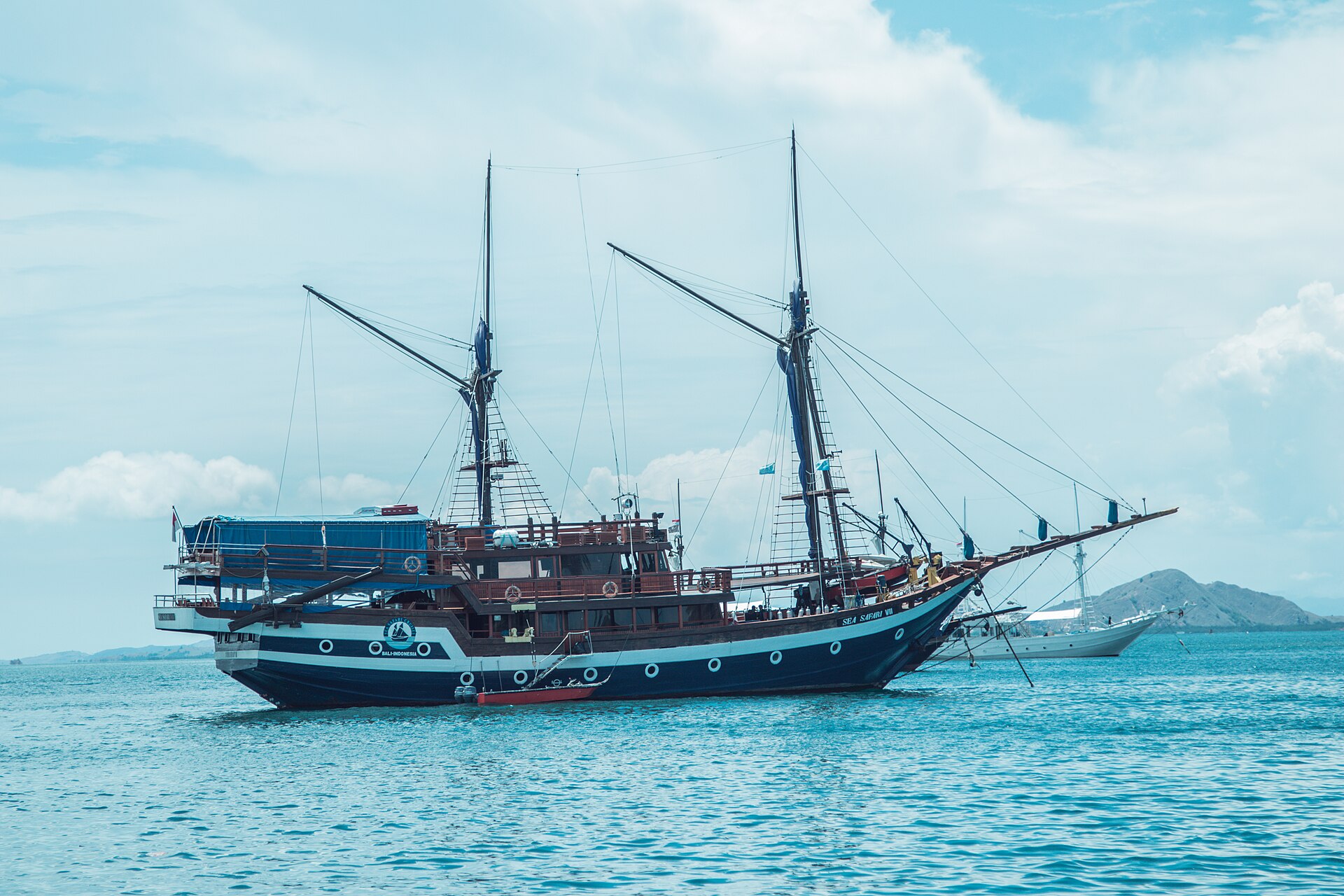
2D1N Komodo Sailing Trip
Spend a night on a traditional phinisi boat inside Komodo National Park.
From USD 180 / IDR 2,950,000 · per person, sharing cabin
Frequently asked questions
Is it safe to see Komodo dragons?
Yes, as long as you stay with your ranger, keep at least five metres away and follow the briefing. Rangers guide every group, and incidents with tourists are very rare.
Komodo Island or Rinca Island: which is better for dragons?
Both are good. Rinca is closer to Labuan Bajo, has an elevated boardwalk and often very easy sightings. Komodo Island is larger and wilder, with longer trekking options and Pink Beach nearby.
How long is the trek on Komodo Island?
The standard short trek from Loh Liang takes 30 to 60 minutes. Medium and long treks take around one to two hours, and longer adventure walks can sometimes be arranged in advance.
Can you see Komodo dragons without a guide?
No. Walking in dragon habitat is only allowed with a park ranger, who is arranged at the ranger station as part of your visit.
What is the best time to see Komodo dragons?
Early morning and late afternoon, when the dragons are active and the heat is bearable. They can be seen all year, but the dry season from April to November brings calmer seas.
More destinations
Want to see it for yourself?
Tell us your dates and the places you would like to visit – we put together the best trip for you.